adversiment
Nearly 40% of Americans can’t cover a $400 emergency without borrowing or selling something. This shows how important effective debt payoff methods are for many people.
Debt payoff methods are ways to cut down and get rid of consumer debts like credit cards and loans. They include behavioral, structural, and product-based tactics.
The main goals are simple. They aim to lower interest costs, shorten repayment time, protect your credit score, and achieve lasting financial stability. This article will share proven debt payoff methods for U.S. consumers to use today.
We’ll look at the best strategies, from budgeting and side hustles to debt snowball and avalanche methods. You’ll also learn about financial tools and negotiation tactics that can help. These strategies can lead to a clearer repayment plan, lower interest costs, better cash flow, and sustainable money habits.
Understanding Debt and Its Impact on Your Finances
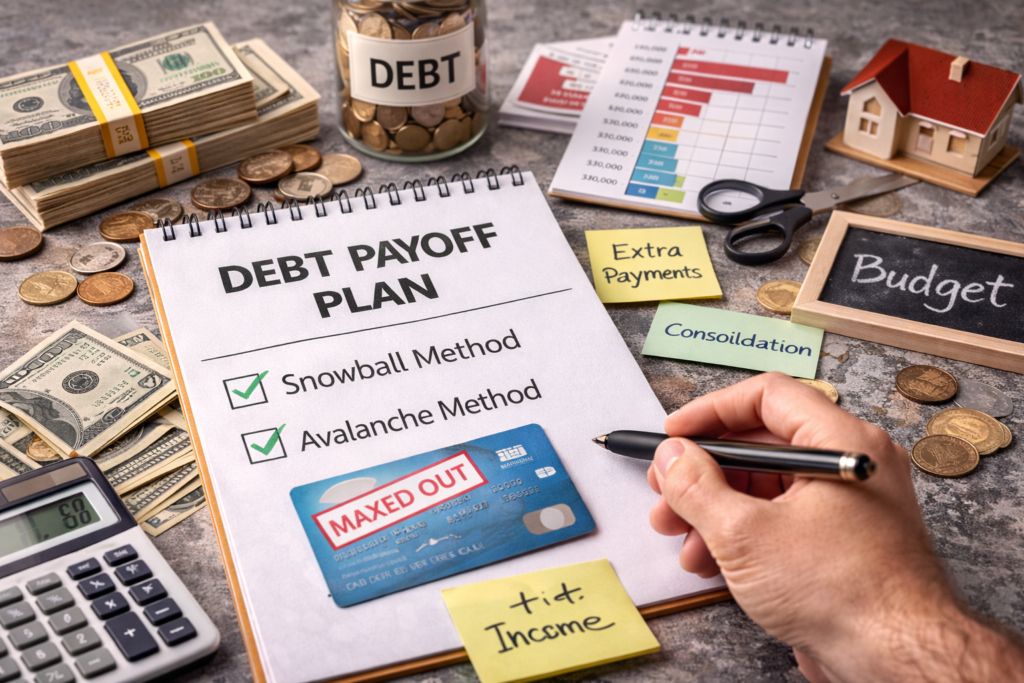
There are many types of consumer debt. Unsecured debt includes things like credit cards and personal loans. Secured debt includes auto loans and mortgages. Student loans, medical bills, and lines of credit add more layers.
Knowing what kind of debt you have helps you choose the best debt repayment options. It also helps you find the most effective debt reduction techniques for your situation.
Debt is more than just money. It can cause stress and anxiety. Studies show that financial problems can lead to sleep issues and poor decision-making.
These problems can make it hard to focus at work. They can also make it difficult to stick to debt payoff methods.
The Psychological Effects of Debt
Debt can make people feel ashamed and hide their problems. This can lead to avoiding help or credit counseling. Avoiding these steps makes it harder to get out of debt.
Debt can change how we make decisions. It can make us think short-term and avoid risks. This can slow down our progress in paying off debt and reaching our financial goals.
The Financial Toll of Debt Accumulation
Interest and fees can make debt grow fast. High-interest credit cards make it harder to pay off and increase costs. In the U.S., credit card rates are often higher than secured loan rates.
Missing payments and using too much credit can lower your credit score. A lower score means higher costs for loans and insurance. Paying interest and fees means you can’t save or invest that money.
Debt levels have been rising over time, according to the Federal Reserve and CFPB. It’s important to change our behavior and use financial strategies together. Choosing debt payoff methods that work with our mindset and money is key to success.
The Importance of a Debt Payoff Strategy
Choosing the right debt payoff strategy is key to getting out of debt. Making random payments slows you down, increases interest, and lowers motivation. A solid plan helps you move forward steadily, track your progress, and budget more easily.
There are many debt repayment options, each suited for different people. Some like the quick wins for motivation. Others aim to save on interest. Finding a method that fits your lifestyle and goals keeps you going without getting tired.
Benefits of Having a Plan
Having a clear plan reduces stress and makes decisions easier. It tells you exactly what to pay and when. This helps you stick to your chosen debt payoff methods.
Being efficient means focusing on high-interest debt first. This cuts down on interest costs. Choosing methods that keep you motivated also helps you pay off debt faster and cheaper.
Seeing milestones and timelines boosts your motivation. Reaching small goals early on keeps you going towards bigger ones.
Knowing what to expect makes budgeting easier. As payments decrease, planning your finances becomes simpler and safer.
Common Pitfalls to Avoid
Ignoring interest rates and fees can lead to higher costs. Always check APRs and extra charges before you start.
Consolidating debt without changing spending habits can lead to longer debt terms. Consolidation can be helpful if you also improve your budgeting.
Not having an emergency fund can lead to new debt. Keeping a small cash reserve helps you stay on track with your debt repayment.
Setting unrealistic goals can burn you out. Don’t underestimate the impact of income changes. Adjust your goals as needed.
Not tracking your progress or not updating your plan when life changes can hinder success. Regularly reviewing your plan lets you adjust your strategy as needed.
Choose a strategy that fits your personality and financial situation. The next sections will explore common and effective debt payoff methods. This will help you find the best plan for you.
Debt Snowball Method: A Step-by-Step Guide
The debt snowball method is a simple plan to get out of debt. First, list all your debts and sort them by balance from smallest to largest. Pay the minimum on all while putting extra money towards the smallest debt until it’s paid off.
Once that’s done, move the money to the next smallest debt and repeat. Keep doing this until all your debts are gone.
Here are the steps to start. This method is one of several ways to stay on track and build momentum in paying off debt.
How to Get Started
- Gather recent statements for every account and note balances, minimum payments, and due dates.
- Rank debts by balance, smallest first, regardless of interest rate.
- Decide on a realistic extra payment amount by reviewing your budget or using side-hustle income.
- Set up autopay for minimums to avoid late fees, then create a separate schedule for extra payments to the targeted account.
- Track expected payoff dates and celebrate each paid-off account to maintain momentum.
Advantages of the Debt Snowball Approach
- Psychological wins come fast when small balances disappear, creating motivation and confidence.
- Simplicity and predictability make this approach user-friendly for those who prefer clear, repeatable steps.
- It works well for people who struggle to stick with plans and need early proof of progress.
- The method pairs well with budgeting and emergency-fund tactics to reduce setbacks while paying down debt.
- Trade-offs exist: it can cost more in interest than the avalanche method when rates vary widely, yet many still choose snowball because behavioral benefits often lead to better long-term success.
For those looking at the best ways to pay off debt, the debt snowball method is highly rated for motivation and structure. If you want to pay off debt quickly and stay motivated, try this method with disciplined budgeting. Also, occasionally review other debt payoff methods to make sure your plan still fits your financial situation.
Debt Avalanche Method: Prioritizing High-Interest Debt
The debt avalanche method is all about cutting down interest costs quickly. You pay the minimum on all accounts but put extra money towards the one with the highest APR. This method helps you pay off the most expensive debt first, making every payment count.
First, list all your debts by APR, balance, and minimum payment. Calculate the monthly interest by multiplying the balance by the APR divided by 12. Don’t forget to include fees and special offers to get the true cost. This way, you can see which debt costs the most each month, not just by how much you owe.
Use a spreadsheet or apps like Mint and YNAB to plan your debt payoff. The Consumer Financial Protection Bureau has calculators to help estimate your timeline. These tools help you track your progress and stay on track with your budget.
Calculating Your Interest Rates
Get your account statements and note down the APR, balance, and minimum payment for each debt. To find the monthly interest, divide the APR by 12 and then multiply by the balance. Do this for all debts to find out which one costs the most in interest.
Remember to include fees, balance transfer offers, and deferred interest. A card with a low promotional rate might have a big deferred charge if the terms change. This gives you a more accurate picture of your debt reduction options.
Benefits of the Debt Avalanche Method
This method clearly saves you money by reducing total interest and shortening repayment time. It’s perfect for those who value cost efficiency and steady progress towards paying off their debt.
It’s most effective when you have debts with different APRs, like a high-interest credit card and a lower-interest personal loan. With careful budgeting, the debt avalanche method can save you the most money.
For extra motivation, try a mix of methods. Start with a few small debts to get quick wins, then switch to the avalanche method. This approach combines the benefits of quick wins with the long-term savings of focusing on high-interest debt.
| Debt Item | APR | Balance | Minimum Payment | Monthly Interest Cost (Balance × APR/12) |
|---|---|---|---|---|
| Visa Credit Card | 22.00% | $4,200 | $126 | $77.00 |
| Mastercard | 18.50% | $2,800 | $84 | $43.17 |
| Personal Loan (Wells Fargo) | 6.00% | $8,500 | $175 | $42.50 |
| Student Loan (Federal) | 4.50% | $12,000 | $120 | $45.00 |
| How to Apply | Pay minimums on all debts. Direct extra funds to the row with the highest monthly interest cost. Recalculate monthly as balances drop. | |||
Balance Transfer Credit Cards: A Temporary Solution
Balance transfer credit cards offer a 0% APR or low APR for a few months. This can make paying off debt faster. But, you’ll pay a fee, usually three to five percent.
After the promo ends, the APR can go up a lot. So, timing is key.
Balance transfers are just one way to pay off debt. They work best if you can stick to a strict payment plan. Compare them to debt consolidation and settlement to find what’s best for you.
Finding the Right Offers
Look at offers from big issuers like Chase, Citi, Discover, and Bank of America. Check the promo length, the APR after it ends, and the transfer fee. Make sure you qualify by checking your credit score and available credit.
Use online tools and issuer websites for the latest deals. Think about how long it’ll take to pay off your debt. A longer promo with a higher fee might still save you money if you pay off before the rate changes.
Managing Your New Debt Effectively
Plan to pay off the balance before the promo ends. Set up automatic payments to avoid missing payments. This could end the promo rate.
Avoid new purchases on the balance transfer card unless it also has 0% on purchases. New charges can start regular interest, undoing any savings. Keep older accounts open if they help your credit, but don’t add new charges until your balances go down.
Include the transfer fee in your savings calculation. This ensures the move really lowers your costs. But, remember the risks: missing the promo end can lead to high interest, and using transfers to hide overspending doesn’t solve the problem.
Personal Loans for Debt Consolidation
Using a single loan to pay off several high-interest accounts can simplify your finances. It makes monthly payments easier to manage. This method replaces many debts with one fixed payment, a set term, and a clear end date.
When to consider a personal loan
Think about this option if you have several high-interest debts, like credit cards, and a steady income. If personal loan rates are lower than your current APR, you could save money and pay off your debt faster. Consolidation also reduces the hassle of managing multiple due dates and lowers the risk of late fees.
Before applying, compare offers from banks, credit unions, and online lenders like LightStream and Marcus by Goldman Sachs. Getting prequalified quotes helps you see APRs, fees, and any penalties for early repayment.
Pros and cons of consolidation loans
Pros include lower interest costs, predictable payments, and a single due date. A successful consolidation can also improve your credit score by changing revolving credit to installment loans.
Cons can outweigh the benefits. Longer repayment terms might increase total interest paid if the new rate is not lower. Origination fees can reduce upfront savings. Those with lower credit scores may not get the best rates. A big risk is returning to credit card spending, which can undo your progress and increase your debt.
To protect your savings, shop around, get prequalified offers, and read the fine print for fees and prepayment rules. Compare consolidation to other debt reduction methods to find what works best for you.
Use consolidation as part of a broader plan, not the only solution. Pair it with a budget, disciplined payments, and careful credit card use to keep your progress and reach debt freedom.
Creating a Sustainable Budget
A good budget is key to paying off debt. It shows how much money you have for bills, cuts down on borrowing, and keeps your life stable while you work on your goals.
To make a budget that works, start small and track your progress. Change your plan as needed to stay on track.
Steps to Develop a Realistic Budget
First, track your income and expenses for a few months. Use bank statements, receipts, and apps to keep a detailed record of every dollar.
Then, sort your spending into needs, bills, and wants. This makes it easier to find ways to save.
Decide how much to spend on debt, savings, and living costs. Use the 50/30/20 rule as a starting point, but adjust it for your goals.
Automate your savings, debt payments, and payroll deductions. This helps you stay consistent and avoid missed payments.
Tips for Sticking to Your Budget
Use budgeting tools like YNAB, Mint, or a spreadsheet to track your money. Clear tracking helps you stay on track with your debt goals.
Set small goals with rewards to keep you motivated. Review your budget monthly and make changes as needed.
Cancel or reduce subscriptions and negotiate bills to save money. Share your budget with your household to ensure everyone is on the same page.
Keep a small emergency fund to avoid going into debt for unexpected expenses. This fund helps you stay on track with your debt repayment plans.
| Step | Action | Benefit |
|---|---|---|
| 1 | Track income and expenses for 1–3 months | Identifies true cash flow and spending leaks |
| 2 | Categorize spending: essentials, obligations, discretionary | Makes trade-offs clearer and shows quick savings |
| 3 | Set prioritized repayment and savings targets | Aligns budget with debt repayment options and goals |
| 4 | Apply 50/30/20 as a starting template | Provides a simple framework to adjust for aggressive payoff |
| 5 | Automate payments and payroll deductions | Reduces missed payments and boosts consistency |
| 6 | Use tools, set milestones, review monthly | Maintains momentum and adapts to life changes |
| 7 | Build a small emergency fund | Prevents setbacks and supports effective ways to eliminate debt |
Side Hustles and Extra Income Streams
Getting extra money can help you pay off debt faster. Side hustles offer a quick way to increase your monthly income. This extra cash can help you stick to your debt repayment plan.
Popular Side Hustles for Extra Cash
- Rideshare and delivery driving with Uber, Lyft, DoorDash, or Instacart for flexible hours and quick payouts.
- Freelance work on Upwork or Fiverr in writing, design, programming, or virtual assistance; strong profiles turn into steady projects.
- Tutoring and teaching through VIPKid or Wyzant, or local coaching for higher hourly rates.
- Selling unused items on eBay, Facebook Marketplace, or Poshmark to convert clutter into cash.
- Gig tasks via TaskRabbit, local lawn care, babysitting, pet sitting, or dog walking built on trust and referrals.
- Short-term rentals on Airbnb or paid research studies for semi-passive income when practical.
How to Utilize Extra Income for Debt Repayment
Put all side-hustle money towards your debt until you clear one account. This approach keeps you motivated and shows quick progress.
Keep your living costs the same to ensure the extra money goes towards your debt. View these jobs as ways to pay off debt faster, not as a way to upgrade your lifestyle.
Use big windfalls like tax refunds or bonuses to tackle high-interest cards first. Or, use them to clear a small balance quickly. Update your debt repayment trackers to see how side hustles help you reach your goals faster.
Track your earnings and set aside money for taxes to avoid surprises. Keep contributing to an emergency fund while using extra cash for debt. This way, you won’t go back to using credit when unexpected bills come up.
For more ideas and resources, check out a guide on Chase. By combining disciplined income streams with a solid plan, you can pay off debt quickly through consistent effort and smart choices.
The Role of Emergency Funds in Debt Payoff
An emergency fund is like a safety net for unexpected costs. It helps avoid using high-interest credit, which can slow down debt repayment. This small reserve makes it easier to stay on track with debt plans, even when life gets tough.
Why You Need an Emergency Fund
An emergency fund stops new debt when money is tight. Having savings means you don’t have to use credit cards or take out payday loans. This keeps your debt repayment plan on track.
Having cash on hand also helps you sleep better. People who get enough rest are more likely to stick to their debt plans. This reduces stress and helps avoid making mistakes.
Having money available also gives you power when talking to creditors. If you’re facing a tough time, you can negotiate better terms. This is much stronger than asking for help when you’re desperate.
Building Your Emergency Fund While Paying Off Debt
Start with a small goal, like saving $500–$1,000 for small emergencies. As your income grows, aim for three to six months of living expenses. This way, you can keep up with debt payments and savings.
Split your monthly money between savings and debt payments. For example, put $50–$200 into savings while still paying off debt. This keeps you focused on both goals.
Automate savings to a high-yield account to earn interest. Choose banks like Ally, Marcus, or Discover. Set up transfers right after each paycheck to keep making progress.
If you need to use the fund, refill it as soon as you can. This keeps your debt repayment plan strong against future surprises.
Only take out small emergency loans as a last resort. Look for community help, creditor programs, or payment plans instead. These options are often cheaper and help you stay on track with debt repayment.
| Goal | Amount | Monthly Funding Example | Benefit to Debt Repayment |
|---|---|---|---|
| Starter Fund | $500–$1,000 | $50–$100 | Prevents small shocks from growing into new balances |
| Short-Term Safety | 1 month essential expenses | $100–$300 | Buys breathing room during temporary income loss |
| Stability Target | 3–6 months essential expenses | $200–$600 | Enables steady focus on long-term debt repayment options |
| Replenishment Plan | Variable | Lump-sum or boosted monthly transfer | Restores protection quickly after use, keeping debt payoff methods effective |
Negotiating with Creditors
Facing a lot of bills can make you feel alone. But, you can make progress by talking calmly and planned with your lenders. Negotiating aims to lower interest rates, waive fees, or set up payment plans.
Strategies for Debt Negotiation
First, collect all your account details and payment history. Know how much you can pay before calling. Talk to the creditor’s hardship department and explain your situation.
Ask for specific help like lower rates or payments. Offer a clear plan with a timeline and amounts. Be honest about what you can do.
If you’re talking about a settlement, get it in writing first. Remember, forgiven debt might affect your taxes. Keep records of all your talks.
When to Consider Professional Help
If talking to creditors is too hard or you’re facing legal action, get help. Nonprofit credit counselors offer free advice and budgeting help. They can also help with debt management plans.
For complex issues, talk to a Certified Public Accountant or a consumer law attorney. Be careful with debt settlement firms that charge a lot upfront. Check reviews and Consumer Financial Protection Bureau alerts.
If you can’t handle your debt, talk to a bankruptcy attorney. They can explain how bankruptcy affects your credit and future loans. Choose professionals wisely by checking their reputation and accreditation.
It’s important to compare your options. Decide between negotiating, debt settlement, or consolidation. Choose the best method for your budget and goals.
Leveraging Support: Family and Friends
Turning to loved ones can be a smart move when you need quick help with debt. They can offer emotional support, help with budgeting, or even some money. But remember, they should be just one part of your plan to pay off debt.
How to Approach Loved Ones for Help
Be clear about why you need help and what kind. Say how much money or what kind of support you need. Explain how it fits into your plan to pay off debt.
Choose people you trust and ask politely. Don’t make them feel obligated. Offer a clear repayment plan and talk about how you’ll make payments.
Start with non-money help like meal swaps or job leads. This can help keep your relationships strong.
Setting Clear Terms for Support
Write down any agreements you make. Include how you’ll repay, any interest, and what happens if you can’t pay. A simple promissory note can help clear things up.
Stay in touch and keep your promises. This helps keep trust strong. But remember, mixing money and relationships can be tricky. Be ready to say no if it’s not good for you.
If asking family isn’t an option, look at other ways to pay off debt. Nonprofits, hardship programs, or community help can be useful. Using these options with proven methods can help you achieve financial freedom.
Maintaining Progress After Debt Payoff
Finishing your last payment is a big deal, but it’s just the beginning. It’s the start of a plan to keep your financial gains. Simple steps like keeping records, rewarding yourself, and sharing your success can help you stay on track.
Celebrating Your Achievements
Mark your milestones with small, affordable rewards. Enjoy a meal out or donate to a charity. These small treats let you celebrate without spending too much.
Keep a chart or timeline of your payments where you can see it. Seeing your success every day can motivate you to stay disciplined.
Tell your friends or share online to stay accountable. Sharing your success can strengthen your resolve and help you stay debt-free.
Staying debt-free: Long-Term Strategies
Start saving for emergencies by setting aside three to six months of expenses. Then, use extra money for retirement and investments. Keep a budget and review it often. Use automatic transfers to stay on track.
Use credit wisely by paying off your balance each month. Keep your credit utilization low and check your reports for errors. Diversify your income and protect it with insurance. Periodically review your loans and accounts to see if refinancing can help.
Staying debt-free requires changing your behavior, planning, and using smart financial tools. Follow the debt payoff methods from this article. Set new goals and tackle them with the same discipline that helped you become debt-free.
FAQ
What are the most effective debt payoff methods?
Which is better for my situation: debt snowball or debt avalanche?
How fast can I realistically pay off my debt?
Are balance transfer credit cards a good idea?
When should I consider a personal loan to consolidate debt?
How important is an emergency fund while paying off debt?
FAQ
What are the most effective debt payoff methods?
The best ways to pay off debt mix behavior changes with financial tools. The debt snowball and avalanche methods are effective. The snowball targets small balances first for motivation, while the avalanche focuses on high-interest debts.
Balance transfer cards offer 0% APR for a time. Personal loans can consolidate debt. Use a budget, save for emergencies, and earn extra money to speed up your debt payoff.
Which is better for my situation: debt snowball or debt avalanche?
Pick the snowball if you want quick wins to stay motivated. It starts with the smallest debt. The avalanche targets high-interest debts first to save on interest.
Many people use a mix of both. Start with a few small wins, then focus on the highest-interest debts.
How fast can I realistically pay off my debt?
Payoff speed depends on your total debt, interest rates, and extra money each month. A clear budget and extra income can help a lot. Use debt payoff calculators to plan and track your progress.
Are balance transfer credit cards a good idea?
Balance transfer cards can be helpful if you can pay off the balance before the promo ends. Look at fees, promo length, and the APR after the promo. Don’t use the card for new purchases and have a plan to avoid high interest later.
When should I consider a personal loan to consolidate debt?
Think about a personal loan if you have high-interest debts and a good credit score. It simplifies payments and sets a fixed payoff date. But watch for fees and avoid long terms that increase interest costs.
How important is an emergency fund while paying off debt?
An emergency fund is very important. It helps you avoid using credit for unexpected expenses. Start with 0–
FAQ
What are the most effective debt payoff methods?
The best ways to pay off debt mix behavior changes with financial tools. The debt snowball and avalanche methods are effective. The snowball targets small balances first for motivation, while the avalanche focuses on high-interest debts.
Balance transfer cards offer 0% APR for a time. Personal loans can consolidate debt. Use a budget, save for emergencies, and earn extra money to speed up your debt payoff.
Which is better for my situation: debt snowball or debt avalanche?
Pick the snowball if you want quick wins to stay motivated. It starts with the smallest debt. The avalanche targets high-interest debts first to save on interest.
Many people use a mix of both. Start with a few small wins, then focus on the highest-interest debts.
How fast can I realistically pay off my debt?
Payoff speed depends on your total debt, interest rates, and extra money each month. A clear budget and extra income can help a lot. Use debt payoff calculators to plan and track your progress.
Are balance transfer credit cards a good idea?
Balance transfer cards can be helpful if you can pay off the balance before the promo ends. Look at fees, promo length, and the APR after the promo. Don’t use the card for new purchases and have a plan to avoid high interest later.
When should I consider a personal loan to consolidate debt?
Think about a personal loan if you have high-interest debts and a good credit score. It simplifies payments and sets a fixed payoff date. But watch for fees and avoid long terms that increase interest costs.
How important is an emergency fund while paying off debt?
An emergency fund is very important. It helps you avoid using credit for unexpected expenses. Start with $500–$1,000 and aim for 3–6 months of essentials. Small, regular savings can protect your debt payoff progress.
Can negotiating with creditors reduce what I owe?
Yes. Negotiating with creditors can lower interest rates, waive fees, or offer settlements. Prepare your account details and propose realistic payments. For complex cases, consider a credit counselor or attorney.
What side hustles provide the best extra cash for debt repayment?
Good side hustles include rideshare and delivery, freelancing, tutoring, and selling items online. Direct all earnings to your debts while keeping living costs steady. Remember to save for taxes if you’re self-employed.
How should I build a budget that supports accelerated debt payoff?
Start by tracking your income and expenses for a few months. Then, categorize spending and set debt and savings targets. Use the 50/30/20 rule as a base and adjust for your goals. Automate payments and savings, cut unnecessary subscriptions, and review your budget monthly.
What pitfalls should I avoid while paying off debt?
Don’t ignore interest rates and fees, and avoid consolidation without changing spending. Keep an emergency fund, set realistic goals, and track your progress. Be cautious of debt-settlement companies and using balance transfers for overspending.
Is professional help worth it and when should I seek it?
Professional help is worth it if you’re overwhelmed, facing collections, or have complex debt. Start with a nonprofit credit counselor for budgeting and debt plans. For legal advice, consult a consumer law attorney or bankruptcy lawyer.
How do I make sure I stay debt-free after paying off loans and cards?
Celebrate your victories wisely, keep growing your emergency fund, and automate savings. Stay on a budget and use credit wisely. Build multiple income streams and review your financial products regularly to save money.
,000 and aim for 3–6 months of essentials. Small, regular savings can protect your debt payoff progress.
Can negotiating with creditors reduce what I owe?
Yes. Negotiating with creditors can lower interest rates, waive fees, or offer settlements. Prepare your account details and propose realistic payments. For complex cases, consider a credit counselor or attorney.
What side hustles provide the best extra cash for debt repayment?
Good side hustles include rideshare and delivery, freelancing, tutoring, and selling items online. Direct all earnings to your debts while keeping living costs steady. Remember to save for taxes if you’re self-employed.
How should I build a budget that supports accelerated debt payoff?
Start by tracking your income and expenses for a few months. Then, categorize spending and set debt and savings targets. Use the 50/30/20 rule as a base and adjust for your goals. Automate payments and savings, cut unnecessary subscriptions, and review your budget monthly.
What pitfalls should I avoid while paying off debt?
Don’t ignore interest rates and fees, and avoid consolidation without changing spending. Keep an emergency fund, set realistic goals, and track your progress. Be cautious of debt-settlement companies and using balance transfers for overspending.
Is professional help worth it and when should I seek it?
Professional help is worth it if you’re overwhelmed, facing collections, or have complex debt. Start with a nonprofit credit counselor for budgeting and debt plans. For legal advice, consult a consumer law attorney or bankruptcy lawyer.
How do I make sure I stay debt-free after paying off loans and cards?
Celebrate your victories wisely, keep growing your emergency fund, and automate savings. Stay on a budget and use credit wisely. Build multiple income streams and review your financial products regularly to save money.