
adversiment
Nearly 40% of American adults say they could not cover a $400 emergency without borrowing or selling something. This shows how one mistake can ruin years of hard work.
This guide aims to help U.S. readers avoid financial mistakes and make wise money choices. We’ll offer practical tips for everyone, from new career starters to those nearing retirement.
Why is it important to avoid financial mistakes? It helps keep your wealth safe, lowers stress, and makes big dreams like owning a home or retiring comfortably possible. Data from the Federal Reserve, credit card and student loan balances, and low retirement rates among young workers highlight these risks.
The article is divided into ten sections. You’ll get advice on common errors, controlling spending, saving, managing debt, starting retirement accounts early, choosing insurance, investing wisely, improving financial knowledge, and when to seek professional advice.
Think of this as a checklist. Bookmark it and come back to it as you put these tips into action. This will help you build a more stable financial future.
Understanding Common Financial Mistakes
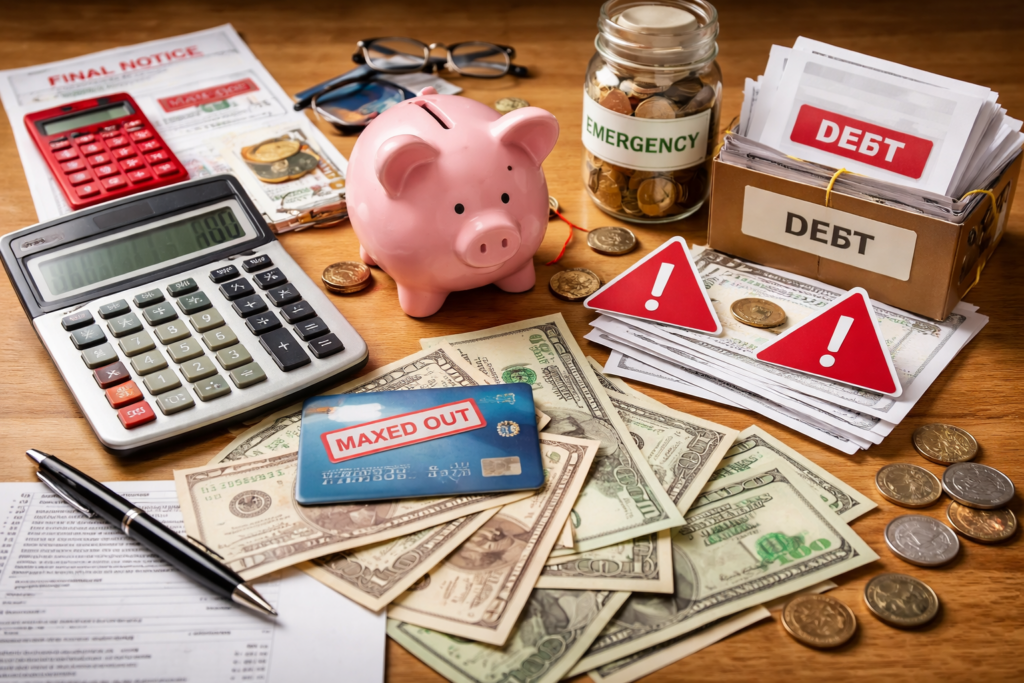
Knowing what financial mistakes you make is the first step to making better choices. Studies by Daniel Kahneman and Richard Thaler show we often make automatic choices. This includes buying things on impulse and putting off saving.
Start by doing a quick review of your spending. Look at your bank and credit card statements from the last three months. This will help you see patterns. Then, calculate your net worth to understand your financial situation better.
Make a list of your regular spending, like eating out or subscription services. If you spend a lot on dining out, try meal planning and setting a grocery budget. Small changes can make a big difference in avoiding financial pitfalls.
Use tools that fit into your daily life. Apps like Mint and YNAB help track your spending and set goals. Even big banks offer features to help you manage your money.
Common financial mistakes include living paycheck-to-paycheck, relying too much on credit cards, and not saving enough for retirement. In the U.S., many people don’t have retirement accounts, and credit card debt is still high. These issues are widespread.
Once you know where you’re going wrong, you can start making changes. If you’re struggling with credit card debt, focus on paying off the highest-interest balances first. If you’re not saving enough for retirement, set up automatic contributions. Making these changes can help you avoid financial mistakes.
| Common Issue | Simple Audit Step | Targeted Fix |
|---|---|---|
| Living paycheck-to-paycheck | Track income and fixed costs for one month | Create a 30-day buffer and build a $1,000 starter emergency fund |
| High credit card balances | List cards, rates, and minimum payments | Use snowball or avalanche method; negotiate rates with issuer |
| Low retirement savings | Check retirement account balances and contribution rates | Increase contributions by 1% each quarter; use employer match |
| Inadequate insurance | Inventory policies and coverage limits | Compare quotes and adjust deductible versus premium |
| Untracked discretionary spending | Record all nonessential purchases for 90 days | Set monthly limits and replace habits with low-cost alternatives |
Overspending and Its Consequences
Overspending can hurt your short-term stability and slow down long-term goals. Missing bill payments can lead to late fees and damage your credit score. Overdraft fees, which are about $35 at many banks, can quickly add up.
High credit card use can lower your FICO score, making borrowing more expensive. This can also limit your ability to save, delay homeownership, and slow down retirement savings.
A weak saving habit makes it hard to build an emergency fund. Mortgage lenders prefer debt-to-income ratios below 43 percent. So, overspending can limit your loan options.
Effective tracking and budgeting are key to managing money well. Tracking shows where your money goes. Budgeting helps direct funds to your priorities.
Both practices help avoid financial mistakes and support clear financial planning. They are essential for managing your money wisely.
Tracking Your Expenses
Start by linking your accounts to apps like Mint, YNAB, or Personal Capital. This lets transactions import automatically. Then, categorize your spending into essentials, bills, and discretionary purchases.
Run weekly or monthly reports to spot trends. If you prefer hands-on control, try the envelope system for cash or a simple spreadsheet.
Review your bank and credit card statements to find recurring subscriptions. Tools like Rocket Money can help identify hidden charges. Cancel services that add little value to avoid wasting money.
Setting a Realistic Budget
Choose a budget framework that fits your life. The 50/30/20 rule splits your income into essentials, discretionary, and savings. Zero-based budgeting assigns every dollar a purpose. Value-based budgeting focuses on what matters most.
Apply realistic adjustments to your budget. Cutting 10–20% of discretionary spending can boost savings and debt paydown. Automate transfers to savings and bills to reduce late fees and enforce discipline.
Set benchmarks for progress. Aim for a 3–6 month emergency fund. Track your debt-to-income ratio to stay within lender preferences. Review and update your budget after major life changes.
- Practical tip: Run monthly budget reviews and adjust categories as needed.
- Practical tip: Automate savings deposits to make building buffers routine.
- Practical tip: Use a mix of apps and manual checks to avoid financial mistakes.
| Method | Best For | Quick Outcome |
|---|---|---|
| 50/30/20 | Simple allocation | Balanced saving and spending |
| Zero-based budgeting | Hands-on control | Every dollar assigned |
| Value-based budgeting | Priority-focused spending | Higher satisfaction per dollar |
Use these tips to build strong money habits. Regular tracking, smart tools, and realistic budgets help avoid mistakes and reach goals without sacrificing quality of life.
Ignoring the Power of Saving
Saving is like a financial safety net. It helps when you lose your job, get unexpected medical bills, or need to fix your car fast. The Federal Reserve says many people don’t have enough money saved. This makes emergency funds very important for making smart money choices and avoiding financial mistakes.
Start with a small goal, like saving $1,000 first. Then, aim to save three to six months’ worth of expenses. Use automatic transfers to keep saving going. Set up regular transfers to a high-yield account at Ally, Marcus by Goldman Sachs, or Discover. You can also use payroll deductions or save tax refunds and bonuses for your fund.
Building an Emergency Fund
- Set a short-term goal: $1,000 emergency cushion.
- Target medium-term: three to six months of bills and essentials.
- Automate deposits to reduce friction and improve follow-through.
Different Saving Techniques
- Pay-yourself-first: move money to savings on payday before spending.
- Bucket approach: use separate accounts for short, medium, and long-term goals.
- Round-up programs: apps like Acorns or Chime save spare change automatically.
- High-yield savings and short-term CDs: compare online bank APYs to local banks.
Behavioral tools help you stick to saving. Use commitment devices, set small goals with rewards, and check your progress monthly. Tax-advantaged accounts are also helpful. A 529 plan protects education savings, and a Health Savings Account works with high-deductible plans.
| Strategy | Best For | Example Providers |
|---|---|---|
| High-yield savings | Emergency fund access with better interest | Ally, Marcus by Goldman Sachs, Discover |
| Short-term CD | Lock small sums for a higher guaranteed rate | Online banks, regional credit unions |
| Round-up apps | Small, steady growth without effort | Acorns, Chime |
| 529 plan | Education savings with tax advantages | State-sponsored plans |
Following simple financial tips can reduce stress and make you more resilient. Regular saving helps you avoid financial mistakes and supports smart money choices over time.
Mismanaging Debt
Debt can be good for building a house or career if used right. But, it can ruin finances if not managed well. Having clear rules and habits helps make better financial choices and avoid common mistakes.
Knowing the difference between good and bad debt is key. Good debt, like for education or a home, can increase your income. Bad debt, like high-interest credit cards, can hurt your savings.
Understanding Good vs. Bad Debt
Mortgages and some student loans are good debt if the interest is low. The Department of Education says federal student loans have better protections than private ones. But, housing values can change, and upkeep costs are important.
High-interest credit cards, cash advances, and payday loans are bad debt. Their high rates can quickly add up. Always compare rates and expected returns before borrowing for investments or school.
Strategies for Debt Repayment
- Snowball method: Start with the smallest balances to build momentum. Dave Ramsey’s method helps many stay motivated.
- Avalanche method: Focus on the highest-interest balances first to save money. CFP Board advisors often suggest this.
- Consolidation and refinancing: Use personal loans or balance-transfer cards to lower rates. Check all costs before switching.
- Negotiation and hardship options: Talk to servicers early for hardship plans. Nonprofit agencies like the National Foundation for Credit Counseling can help.
- Managing credit cards: Keep balances low for better scores. Pay in full when you can and avoid cash advances. Choose rewards cards wisely.
- Legal and recovery tools: Bankruptcy should be a last resort. Talk to a bankruptcy attorney and a financial counselor for advice.
Small changes in how you pay off debt can make a big difference. Planning carefully helps avoid financial mistakes and stress.
Delaying Retirement Savings
Waiting to save for retirement costs more than you might think. Small early savings grow fast with compound interest. They can beat larger savings made later. Use smart financial planning tips to make time work for you.
Let’s look at the numbers. A 7% annual return shows a big difference between starting at 25 and 35. Starting early means more time for growth and less pressure to save later.
Focus on time in the market, not trying to time it. Dollar-cost averaging helps avoid risks from market ups and downs. Over time, steady investing usually beats trying to time the market.
The Benefits of Early Investing
Early investing uses compound interest and tax benefits in accounts like 401(k)s and IRAs. Employer matches are like free money. So, save enough to get the full match.
Set up automatic savings and increases to stay on track. Use low-fee index funds from Vanguard, Fidelity, or Schwab. Periodic rebalancing keeps your risk level right for your life stage.
Retirement Accounts Explained
Knowing about different accounts helps avoid mistakes in retirement planning.
- 401(k)/403(b): Employer plans with pre-tax or Roth options. Save enough to get the full employer match.
- Traditional IRA: Contributions may be tax-deductible based on income and plan coverage.
- Roth IRA: Contributions are made after taxes, but withdrawals are tax-free in retirement. Income limits apply.
- SEP-IRA and Solo 401(k): Good for self-employed people with higher contribution limits.
- SIMPLE plans: For small businesses to help employees save with less hassle.
- Brokerage accounts: Useful after maxing out tax-advantaged accounts for more investing freedom.
Simple steps can lead to a secure retirement. Enroll in your employer plan right away. Set up automatic increases and prioritize matching contributions. Choose target-date funds or diversified index funds and review your mix at big life events.
Adopt easy money management strategies to keep moving forward. These tips help avoid common mistakes that can derail your goals.
Lack of Insurance Coverage
Insurance protects your savings from big surprises. Medical bills, car accidents, disability, or fires can hurt your plans. Here are tips to help you avoid mistakes and make smart choices about coverage.
First, list your assets, debts, and monthly costs. Count how many depend on your income. Also, think about how much it would cost to replace your home and car. This helps you see where you might need more coverage.
Types of Insurance You Need
Health insurance is key to avoid high medical costs. Look at ACA plans, employer offers, and Medicare if you qualify. Know the costs, deductibles, and maximums to avoid surprise bills.
Auto insurance must meet state laws. Consider liability, collision, and comprehensive coverage. Higher liability limits can protect your finances more.
Home or renters insurance covers damage, personal items, and liability. Think about extra coverage for floods or earthquakes. Not having enough can leave you with big gaps after disasters.
Disability insurance replaces income if you can’t work. Short-term covers the first months, while long-term protects for years. Social Security disability is limited, so don’t rely only on it.
Life insurance helps support dependents if you pass away. Term life is usually affordable. Whole life adds cash value but costs more. Aim for 7–10 times your annual income in coverage, considering debts and future needs.
Umbrella policies offer extra liability protection. They’re often cheap and provide peace of mind for those with big assets or risks.
Evaluating Your Insurance Needs
Get quotes from different companies and use tools like Policygenius or NerdWallet. Check state data on complaints and rates. Update your policies as your life, job, or home changes.
Look at what’s not covered and limits to avoid surprises. Make sure medical and auto policies fit your needs. Confirm liability and replacement costs for your home.
Use research to guide your choices. Studies show uninsured adults get worse care and have poorer health. See a summary of research on insurance and health outcomes.
Follow these tips to avoid financial mistakes from bad coverage. Regular reviews, realistic estimates, and comparing plans will help protect your future.
Making Impulsive Investment Decisions
Many investors lose money because of quick, emotional trades. Chasing after hot tips or reacting to viral posts can cause big swings in your portfolio. The recent rise of meme stocks and crypto prices shows how emotions can increase risk.
Good investing starts with calm, careful research. Skipping this step is a quick way to make financial mistakes. Taking a few steps before investing can help avoid big losses and improve your long-term success.
Research Before Investing
Start by learning about the investment. Look at SEC filings for public companies and read prospectuses for funds. Use trusted research from Morningstar or reports from Vanguard, Fidelity, and Schwab. Don’t trust tips from social media as real advice.
Compare the investment’s basics to its speculation. Check its revenue, earnings, and how it compares to others. Look at fees and what it holds for funds. Learn about basic values like P/E ratio and free cash flow. Also, think about big factors like interest rates and inflation.
Follow a checklist for due diligence:
- Verify filings and prospectuses
- Read independent analysis from trusted firms
- Confirm fees, holdings, and tax implications
- Stress-test scenarios for downside risk
Diversifying Your Portfolio
Diversification helps protect your savings from big shocks. Spread your money across different types of investments. Include stocks, bonds, cash, and real assets. Mix domestic and international investments for a balanced mix.
Use low-cost index funds and ETFs for easy diversification. Consider Vanguard Total Stock Market Index Fund or Fidelity ZERO for core investments. Rebalance your portfolio regularly to keep your risk in check.
Dollar-cost averaging helps in volatile markets. Keep an emergency fund and short-term cash before investing in risky assets. Match your investments to your time horizon and risk level to avoid common pitfalls.
| Area | What to Do | Why It Helps |
|---|---|---|
| Due Diligence | Read SEC filings, prospectuses, Morningstar reports | Reveals fundamentals and reduces speculation |
| Trusted Platforms | Use Vanguard, Fidelity, Schwab for trading and research | Reliable data and lower chance of bad tips |
| Asset Mix | Hold stocks, bonds, cash, real assets; diversify within classes | Spreads risk across markets and sectors |
| Core Holdings | Low-cost index funds and ETFs | Cost-effective diversification and broad exposure |
| Risk Management | Set allocation by horizon, use dollar-cost averaging, keep emergency cash | Controls volatility and protects against forced selling |
Neglecting Financial Education
Not learning about money can cause many problems and stress. Knowing about finance helps people save more, have less debt, and plan for retirement better. Studies from the Jump$tart Coalition, FINRA, and the National Endowment for Financial Education show learning can really help.
Begin with trusted sources. Websites like MyMoney.gov, the Consumer Financial Protection Bureau, and IRS offer free lessons. Nonprofits like the National Endowment for Financial Education and Smart About Money provide courses and worksheets to help you make better financial choices every day.
Resources for Financial Literacy
Books, podcasts, and online courses make learning easy. Books like The Simple Path to Wealth by JL Collins and Your Money or Your Life by Vicki Robin and Joe Dominguez are great. Podcasts like NPR’s Planet Money and ChooseFI offer quick lessons you can listen to while driving.
Credit unions and banks often have workshops. Digital centers like DCU’s offer basics and tools; check out a concise resource page for tips and programs on avoiding common mistakes.
The Impact of Knowledge on Financial Health
Learning changes how you act. People who learn about money tend to save more, contribute more to retirement, and make smarter insurance choices. These habits help avoid financial mistakes and make you more resilient when life changes.
Use tools from AARP, Bankrate, Vanguard, and Fidelity to test ideas. Set a learning plan: read one article or chapter a week, one book a month, or take a short course every quarter. Small, consistent steps lead to big improvements.
| Resource Type | Example | How It Helps |
|---|---|---|
| Government Guides | MyMoney.gov | Clear lessons on budgeting, credit, and taxes |
| Nonprofit Programs | National Endowment for Financial Education | Free courses and practical worksheets |
| Books | The Simple Path to Wealth | Long-term investing and saving strategies |
| Podcasts & Media | Planet Money | Accessible stories that teach economic concepts |
| Tools & Calculators | Bankrate mortgage and debt calculators | Run scenarios for loans, savings, and retirement |
| Local Workshops | Credit union seminars and community classes | Interactive help and access to counselors |
Not Seeking Professional Help
Many people try to handle complex money matters alone and end up making avoidable mistakes. Knowing when to call a professional can save taxes, protect assets, and improve long-term outcomes. Use financial planning tips to decide if a meeting with an expert could turn a risky situation into smart money choices.
When to Hire a Financial Advisor
Life events that often justify professional help include a large inheritance, selling a business, planning retirement, complex tax returns, or persistent trouble sticking to a budget. Advisors add value through personalized planning, tax-efficient strategies, and emotional discipline during market swings. If you face any of these scenarios, a short consultation can show whether an advisor’s expertise will help you avoid financial mistakes.
Finding a Trusted Professional
Look for credentialed specialists: Certified Financial Planner (CFP) for broad planning, Registered Investment Advisor (RIA) firms for fee-based fiduciary advice, CPA or Enrolled Agent for tax planning, and estate planning attorneys for wills and trusts. Use official searches like the CFP Board and the SEC’s IAPD to verify backgrounds. Ask about fee models (assets under management, hourly, flat-fee), fiduciary status, typical clients, and request a sample plan before committing.
Watch for red flags such as guaranteed high returns, unclear fees, or pressure to buy proprietary products. Consider the cost-benefit: advisor fees are often justified by tax savings, better asset allocation, and peace of mind. Start with a trial consultation, bring key documents, and set measurable goals so the engagement produces real progress and helps you make smart money choices.
FAQ
What are the most common financial mistakes Americans make?
How do I start identifying my personal money weaknesses?
What’s the simplest way to stop overspending?
How much should I have in an emergency fund and how do I build it?
FAQ
What are the most common financial mistakes Americans make?
Many people fail to save for emergencies, carry high-interest debt, and delay retirement savings. They also lack insurance and overspend. Behavioral biases like present bias and optimism bias often lead to these errors.
Data from the Federal Reserve shows many can’t cover a 0 emergency. Credit card and student loan balances are also high, showing the scale of these mistakes.
How do I start identifying my personal money weaknesses?
Start by reviewing your bank and credit card statements for three months. Calculate your net worth and list your regular expenses. Use tools like Mint or YNAB to track your spending.
Look for spending patterns, like dining out too much or many subscriptions. This lets you focus on saving and cutting expenses.
What’s the simplest way to stop overspending?
Track every expense and categorize them weekly. Choose a budgeting method that suits you, like 50/30/20 or zero-based budgeting. Cut discretionary spending by 10–20% to save more.
Set up automatic transfers to savings and review subscriptions with Rocket Money. This helps you save and avoid unnecessary charges.
How much should I have in an emergency fund and how do I build it?
Aim for a
FAQ
What are the most common financial mistakes Americans make?
Many people fail to save for emergencies, carry high-interest debt, and delay retirement savings. They also lack insurance and overspend. Behavioral biases like present bias and optimism bias often lead to these errors.
Data from the Federal Reserve shows many can’t cover a $400 emergency. Credit card and student loan balances are also high, showing the scale of these mistakes.
How do I start identifying my personal money weaknesses?
Start by reviewing your bank and credit card statements for three months. Calculate your net worth and list your regular expenses. Use tools like Mint or YNAB to track your spending.
Look for spending patterns, like dining out too much or many subscriptions. This lets you focus on saving and cutting expenses.
What’s the simplest way to stop overspending?
Track every expense and categorize them weekly. Choose a budgeting method that suits you, like 50/30/20 or zero-based budgeting. Cut discretionary spending by 10–20% to save more.
Set up automatic transfers to savings and review subscriptions with Rocket Money. This helps you save and avoid unnecessary charges.
How much should I have in an emergency fund and how do I build it?
Aim for a $1,000 emergency fund first, then 3–6 months of essential expenses. Automate transfers to a high-yield savings account. Use tax refunds or bonuses to boost your fund.
Use round-up programs or bucketed accounts for short- and medium-term goals. This way, you build liquidity steadily.
What’s the difference between good debt and bad debt?
Good debt finances assets that may appreciate or increase your earning potential. This includes mortgages, some student loans, or business loans. Bad debt is high-interest consumer debt, like credit cards and payday loans.
Compare interest rates and expected returns. Prioritize paying down high-interest balances while managing productive debt responsibly.
Which debt repayment strategy should I use: snowball or avalanche?
Use the avalanche method to minimize interest by paying highest-rate debt first. The snowball method is better if you need motivation—paying the smallest balances first builds momentum.
Combine tactics by prioritizing high-rate accounts while keeping small wins to stay engaged. Consider consolidation or balance-transfer offers if they lower your effective interest rate.
How soon should I start saving for retirement and how much should I contribute?
Start saving as early as possible to benefit from compound interest. Contribute enough to get your employer’s 401(k) match—it’s free money. Aim to increase contributions over time.
Maximize tax-advantaged accounts like 401(k)s and IRAs first, then invest additional savings in taxable accounts if needed.
Which retirement accounts should I know about?
Key accounts include employer 401(k) or 403(b) plans, Traditional and Roth IRAs, SEP-IRA or Solo 401(k) for the self-employed, and taxable brokerage accounts for extra investing. Understand the difference between pre-tax (Traditional) and after-tax (Roth) benefits.
Select low-cost index funds from Vanguard, Fidelity, or Schwab as core holdings.
What types of insurance are essential to avoid financial catastrophe?
Essential coverages include health insurance, auto insurance, homeowners or renters insurance, disability insurance, and life insurance if you have dependents. Umbrella liability policies are also important for higher-net-worth households.
Regularly review deductibles, coverage limits, and exclusions. Compare quotes via Policygenius or NerdWallet.
How can I avoid impulsive investment decisions?
Do thorough research before investing. Read company filings on EDGAR, check fund prospectuses, and use reputable research from Morningstar. Favor a diversified portfolio of low-cost index funds or ETFs.
Use dollar-cost averaging and keep an emergency fund. Avoid trading on social media tips or chasing hot assets without understanding the risks.
Where can I improve my financial education quickly?
Use free government resources like the CFPB and MyMoney.gov, nonprofit sites such as the National Endowment for Financial Education, and reputable books like The Simple Path to Wealth by JL Collins. Podcasts like Planet Money and ChooseFI, and calculators from AARP or Bankrate help build skills.
Set a goal to read one article or chapter monthly to build momentum.
When should I consider hiring a financial advisor?
Hire an advisor for complex tax situations, large inheritances, business sales, retirement planning, estate planning, or if you struggle with financial decisions. Look for Certified Financial Planners (CFP), fee-only Registered Investment Advisors (RIAs), or CPAs for tax issues.
Ask about fiduciary duty, fee structures, sample plans, and references before engaging.
How do I find a trustworthy financial professional?
Search the CFP Board’s directory, NAPFA for fee-only advisors, and the SEC’s IAPD database for RIAs. Interview candidates about fees, fiduciary status, services, and conflicts of interest. Request a transparency on expected outcomes and a sample plan.
Avoid anyone promising guaranteed high returns or pushing proprietary products without clear disclosure.
What immediate steps can I take to avoid common money pitfalls?
Start with a three-step checklist: build a $1,000 starter emergency fund, enroll in your employer retirement plan and capture the match, and create a simple budget using the 50/30/20 rule or a zero-based method. Automate savings and bill payments, review subscriptions, and track spending for a month to find quick wins.
These actions reduce stress and improve long-term financial resilience.
,000 emergency fund first, then 3–6 months of essential expenses. Automate transfers to a high-yield savings account. Use tax refunds or bonuses to boost your fund.
Use round-up programs or bucketed accounts for short- and medium-term goals. This way, you build liquidity steadily.
What’s the difference between good debt and bad debt?
Good debt finances assets that may appreciate or increase your earning potential. This includes mortgages, some student loans, or business loans. Bad debt is high-interest consumer debt, like credit cards and payday loans.
Compare interest rates and expected returns. Prioritize paying down high-interest balances while managing productive debt responsibly.
Which debt repayment strategy should I use: snowball or avalanche?
Use the avalanche method to minimize interest by paying highest-rate debt first. The snowball method is better if you need motivation—paying the smallest balances first builds momentum.
Combine tactics by prioritizing high-rate accounts while keeping small wins to stay engaged. Consider consolidation or balance-transfer offers if they lower your effective interest rate.
How soon should I start saving for retirement and how much should I contribute?
Start saving as early as possible to benefit from compound interest. Contribute enough to get your employer’s 401(k) match—it’s free money. Aim to increase contributions over time.
Maximize tax-advantaged accounts like 401(k)s and IRAs first, then invest additional savings in taxable accounts if needed.
Which retirement accounts should I know about?
Key accounts include employer 401(k) or 403(b) plans, Traditional and Roth IRAs, SEP-IRA or Solo 401(k) for the self-employed, and taxable brokerage accounts for extra investing. Understand the difference between pre-tax (Traditional) and after-tax (Roth) benefits.
Select low-cost index funds from Vanguard, Fidelity, or Schwab as core holdings.
What types of insurance are essential to avoid financial catastrophe?
Essential coverages include health insurance, auto insurance, homeowners or renters insurance, disability insurance, and life insurance if you have dependents. Umbrella liability policies are also important for higher-net-worth households.
Regularly review deductibles, coverage limits, and exclusions. Compare quotes via Policygenius or NerdWallet.
How can I avoid impulsive investment decisions?
Do thorough research before investing. Read company filings on EDGAR, check fund prospectuses, and use reputable research from Morningstar. Favor a diversified portfolio of low-cost index funds or ETFs.
Use dollar-cost averaging and keep an emergency fund. Avoid trading on social media tips or chasing hot assets without understanding the risks.
Where can I improve my financial education quickly?
Use free government resources like the CFPB and MyMoney.gov, nonprofit sites such as the National Endowment for Financial Education, and reputable books like The Simple Path to Wealth by JL Collins. Podcasts like Planet Money and ChooseFI, and calculators from AARP or Bankrate help build skills.
Set a goal to read one article or chapter monthly to build momentum.
When should I consider hiring a financial advisor?
Hire an advisor for complex tax situations, large inheritances, business sales, retirement planning, estate planning, or if you struggle with financial decisions. Look for Certified Financial Planners (CFP), fee-only Registered Investment Advisors (RIAs), or CPAs for tax issues.
Ask about fiduciary duty, fee structures, sample plans, and references before engaging.
How do I find a trustworthy financial professional?
Search the CFP Board’s directory, NAPFA for fee-only advisors, and the SEC’s IAPD database for RIAs. Interview candidates about fees, fiduciary status, services, and conflicts of interest. Request a transparency on expected outcomes and a sample plan.
Avoid anyone promising guaranteed high returns or pushing proprietary products without clear disclosure.
What immediate steps can I take to avoid common money pitfalls?
Start with a three-step checklist: build a
FAQ
What are the most common financial mistakes Americans make?
Many people fail to save for emergencies, carry high-interest debt, and delay retirement savings. They also lack insurance and overspend. Behavioral biases like present bias and optimism bias often lead to these errors.
Data from the Federal Reserve shows many can’t cover a $400 emergency. Credit card and student loan balances are also high, showing the scale of these mistakes.
How do I start identifying my personal money weaknesses?
Start by reviewing your bank and credit card statements for three months. Calculate your net worth and list your regular expenses. Use tools like Mint or YNAB to track your spending.
Look for spending patterns, like dining out too much or many subscriptions. This lets you focus on saving and cutting expenses.
What’s the simplest way to stop overspending?
Track every expense and categorize them weekly. Choose a budgeting method that suits you, like 50/30/20 or zero-based budgeting. Cut discretionary spending by 10–20% to save more.
Set up automatic transfers to savings and review subscriptions with Rocket Money. This helps you save and avoid unnecessary charges.
How much should I have in an emergency fund and how do I build it?
Aim for a $1,000 emergency fund first, then 3–6 months of essential expenses. Automate transfers to a high-yield savings account. Use tax refunds or bonuses to boost your fund.
Use round-up programs or bucketed accounts for short- and medium-term goals. This way, you build liquidity steadily.
What’s the difference between good debt and bad debt?
Good debt finances assets that may appreciate or increase your earning potential. This includes mortgages, some student loans, or business loans. Bad debt is high-interest consumer debt, like credit cards and payday loans.
Compare interest rates and expected returns. Prioritize paying down high-interest balances while managing productive debt responsibly.
Which debt repayment strategy should I use: snowball or avalanche?
Use the avalanche method to minimize interest by paying highest-rate debt first. The snowball method is better if you need motivation—paying the smallest balances first builds momentum.
Combine tactics by prioritizing high-rate accounts while keeping small wins to stay engaged. Consider consolidation or balance-transfer offers if they lower your effective interest rate.
How soon should I start saving for retirement and how much should I contribute?
Start saving as early as possible to benefit from compound interest. Contribute enough to get your employer’s 401(k) match—it’s free money. Aim to increase contributions over time.
Maximize tax-advantaged accounts like 401(k)s and IRAs first, then invest additional savings in taxable accounts if needed.
Which retirement accounts should I know about?
Key accounts include employer 401(k) or 403(b) plans, Traditional and Roth IRAs, SEP-IRA or Solo 401(k) for the self-employed, and taxable brokerage accounts for extra investing. Understand the difference between pre-tax (Traditional) and after-tax (Roth) benefits.
Select low-cost index funds from Vanguard, Fidelity, or Schwab as core holdings.
What types of insurance are essential to avoid financial catastrophe?
Essential coverages include health insurance, auto insurance, homeowners or renters insurance, disability insurance, and life insurance if you have dependents. Umbrella liability policies are also important for higher-net-worth households.
Regularly review deductibles, coverage limits, and exclusions. Compare quotes via Policygenius or NerdWallet.
How can I avoid impulsive investment decisions?
Do thorough research before investing. Read company filings on EDGAR, check fund prospectuses, and use reputable research from Morningstar. Favor a diversified portfolio of low-cost index funds or ETFs.
Use dollar-cost averaging and keep an emergency fund. Avoid trading on social media tips or chasing hot assets without understanding the risks.
Where can I improve my financial education quickly?
Use free government resources like the CFPB and MyMoney.gov, nonprofit sites such as the National Endowment for Financial Education, and reputable books like The Simple Path to Wealth by JL Collins. Podcasts like Planet Money and ChooseFI, and calculators from AARP or Bankrate help build skills.
Set a goal to read one article or chapter monthly to build momentum.
When should I consider hiring a financial advisor?
Hire an advisor for complex tax situations, large inheritances, business sales, retirement planning, estate planning, or if you struggle with financial decisions. Look for Certified Financial Planners (CFP), fee-only Registered Investment Advisors (RIAs), or CPAs for tax issues.
Ask about fiduciary duty, fee structures, sample plans, and references before engaging.
How do I find a trustworthy financial professional?
Search the CFP Board’s directory, NAPFA for fee-only advisors, and the SEC’s IAPD database for RIAs. Interview candidates about fees, fiduciary status, services, and conflicts of interest. Request a transparency on expected outcomes and a sample plan.
Avoid anyone promising guaranteed high returns or pushing proprietary products without clear disclosure.
What immediate steps can I take to avoid common money pitfalls?
Start with a three-step checklist: build a $1,000 starter emergency fund, enroll in your employer retirement plan and capture the match, and create a simple budget using the 50/30/20 rule or a zero-based method. Automate savings and bill payments, review subscriptions, and track spending for a month to find quick wins.
These actions reduce stress and improve long-term financial resilience.
,000 starter emergency fund, enroll in your employer retirement plan and capture the match, and create a simple budget using the 50/30/20 rule or a zero-based method. Automate savings and bill payments, review subscriptions, and track spending for a month to find quick wins.
These actions reduce stress and improve long-term financial resilience.
FAQ
What are the most common financial mistakes Americans make?
Many people fail to save for emergencies, carry high-interest debt, and delay retirement savings. They also lack insurance and overspend. Behavioral biases like present bias and optimism bias often lead to these errors.
Data from the Federal Reserve shows many can’t cover a 0 emergency. Credit card and student loan balances are also high, showing the scale of these mistakes.
How do I start identifying my personal money weaknesses?
Start by reviewing your bank and credit card statements for three months. Calculate your net worth and list your regular expenses. Use tools like Mint or YNAB to track your spending.
Look for spending patterns, like dining out too much or many subscriptions. This lets you focus on saving and cutting expenses.
What’s the simplest way to stop overspending?
Track every expense and categorize them weekly. Choose a budgeting method that suits you, like 50/30/20 or zero-based budgeting. Cut discretionary spending by 10–20% to save more.
Set up automatic transfers to savings and review subscriptions with Rocket Money. This helps you save and avoid unnecessary charges.
How much should I have in an emergency fund and how do I build it?
Aim for a
FAQ
What are the most common financial mistakes Americans make?
Many people fail to save for emergencies, carry high-interest debt, and delay retirement savings. They also lack insurance and overspend. Behavioral biases like present bias and optimism bias often lead to these errors.
Data from the Federal Reserve shows many can’t cover a $400 emergency. Credit card and student loan balances are also high, showing the scale of these mistakes.
How do I start identifying my personal money weaknesses?
Start by reviewing your bank and credit card statements for three months. Calculate your net worth and list your regular expenses. Use tools like Mint or YNAB to track your spending.
Look for spending patterns, like dining out too much or many subscriptions. This lets you focus on saving and cutting expenses.
What’s the simplest way to stop overspending?
Track every expense and categorize them weekly. Choose a budgeting method that suits you, like 50/30/20 or zero-based budgeting. Cut discretionary spending by 10–20% to save more.
Set up automatic transfers to savings and review subscriptions with Rocket Money. This helps you save and avoid unnecessary charges.
How much should I have in an emergency fund and how do I build it?
Aim for a $1,000 emergency fund first, then 3–6 months of essential expenses. Automate transfers to a high-yield savings account. Use tax refunds or bonuses to boost your fund.
Use round-up programs or bucketed accounts for short- and medium-term goals. This way, you build liquidity steadily.
What’s the difference between good debt and bad debt?
Good debt finances assets that may appreciate or increase your earning potential. This includes mortgages, some student loans, or business loans. Bad debt is high-interest consumer debt, like credit cards and payday loans.
Compare interest rates and expected returns. Prioritize paying down high-interest balances while managing productive debt responsibly.
Which debt repayment strategy should I use: snowball or avalanche?
Use the avalanche method to minimize interest by paying highest-rate debt first. The snowball method is better if you need motivation—paying the smallest balances first builds momentum.
Combine tactics by prioritizing high-rate accounts while keeping small wins to stay engaged. Consider consolidation or balance-transfer offers if they lower your effective interest rate.
How soon should I start saving for retirement and how much should I contribute?
Start saving as early as possible to benefit from compound interest. Contribute enough to get your employer’s 401(k) match—it’s free money. Aim to increase contributions over time.
Maximize tax-advantaged accounts like 401(k)s and IRAs first, then invest additional savings in taxable accounts if needed.
Which retirement accounts should I know about?
Key accounts include employer 401(k) or 403(b) plans, Traditional and Roth IRAs, SEP-IRA or Solo 401(k) for the self-employed, and taxable brokerage accounts for extra investing. Understand the difference between pre-tax (Traditional) and after-tax (Roth) benefits.
Select low-cost index funds from Vanguard, Fidelity, or Schwab as core holdings.
What types of insurance are essential to avoid financial catastrophe?
Essential coverages include health insurance, auto insurance, homeowners or renters insurance, disability insurance, and life insurance if you have dependents. Umbrella liability policies are also important for higher-net-worth households.
Regularly review deductibles, coverage limits, and exclusions. Compare quotes via Policygenius or NerdWallet.
How can I avoid impulsive investment decisions?
Do thorough research before investing. Read company filings on EDGAR, check fund prospectuses, and use reputable research from Morningstar. Favor a diversified portfolio of low-cost index funds or ETFs.
Use dollar-cost averaging and keep an emergency fund. Avoid trading on social media tips or chasing hot assets without understanding the risks.
Where can I improve my financial education quickly?
Use free government resources like the CFPB and MyMoney.gov, nonprofit sites such as the National Endowment for Financial Education, and reputable books like The Simple Path to Wealth by JL Collins. Podcasts like Planet Money and ChooseFI, and calculators from AARP or Bankrate help build skills.
Set a goal to read one article or chapter monthly to build momentum.
When should I consider hiring a financial advisor?
Hire an advisor for complex tax situations, large inheritances, business sales, retirement planning, estate planning, or if you struggle with financial decisions. Look for Certified Financial Planners (CFP), fee-only Registered Investment Advisors (RIAs), or CPAs for tax issues.
Ask about fiduciary duty, fee structures, sample plans, and references before engaging.
How do I find a trustworthy financial professional?
Search the CFP Board’s directory, NAPFA for fee-only advisors, and the SEC’s IAPD database for RIAs. Interview candidates about fees, fiduciary status, services, and conflicts of interest. Request a transparency on expected outcomes and a sample plan.
Avoid anyone promising guaranteed high returns or pushing proprietary products without clear disclosure.
What immediate steps can I take to avoid common money pitfalls?
Start with a three-step checklist: build a $1,000 starter emergency fund, enroll in your employer retirement plan and capture the match, and create a simple budget using the 50/30/20 rule or a zero-based method. Automate savings and bill payments, review subscriptions, and track spending for a month to find quick wins.
These actions reduce stress and improve long-term financial resilience.
,000 emergency fund first, then 3–6 months of essential expenses. Automate transfers to a high-yield savings account. Use tax refunds or bonuses to boost your fund.
Use round-up programs or bucketed accounts for short- and medium-term goals. This way, you build liquidity steadily.
What’s the difference between good debt and bad debt?
Good debt finances assets that may appreciate or increase your earning potential. This includes mortgages, some student loans, or business loans. Bad debt is high-interest consumer debt, like credit cards and payday loans.
Compare interest rates and expected returns. Prioritize paying down high-interest balances while managing productive debt responsibly.
Which debt repayment strategy should I use: snowball or avalanche?
Use the avalanche method to minimize interest by paying highest-rate debt first. The snowball method is better if you need motivation—paying the smallest balances first builds momentum.
Combine tactics by prioritizing high-rate accounts while keeping small wins to stay engaged. Consider consolidation or balance-transfer offers if they lower your effective interest rate.
How soon should I start saving for retirement and how much should I contribute?
Start saving as early as possible to benefit from compound interest. Contribute enough to get your employer’s 401(k) match—it’s free money. Aim to increase contributions over time.
Maximize tax-advantaged accounts like 401(k)s and IRAs first, then invest additional savings in taxable accounts if needed.
Which retirement accounts should I know about?
Key accounts include employer 401(k) or 403(b) plans, Traditional and Roth IRAs, SEP-IRA or Solo 401(k) for the self-employed, and taxable brokerage accounts for extra investing. Understand the difference between pre-tax (Traditional) and after-tax (Roth) benefits.
Select low-cost index funds from Vanguard, Fidelity, or Schwab as core holdings.
What types of insurance are essential to avoid financial catastrophe?
Essential coverages include health insurance, auto insurance, homeowners or renters insurance, disability insurance, and life insurance if you have dependents. Umbrella liability policies are also important for higher-net-worth households.
Regularly review deductibles, coverage limits, and exclusions. Compare quotes via Policygenius or NerdWallet.
How can I avoid impulsive investment decisions?
Do thorough research before investing. Read company filings on EDGAR, check fund prospectuses, and use reputable research from Morningstar. Favor a diversified portfolio of low-cost index funds or ETFs.
Use dollar-cost averaging and keep an emergency fund. Avoid trading on social media tips or chasing hot assets without understanding the risks.
Where can I improve my financial education quickly?
Use free government resources like the CFPB and MyMoney.gov, nonprofit sites such as the National Endowment for Financial Education, and reputable books like The Simple Path to Wealth by JL Collins. Podcasts like Planet Money and ChooseFI, and calculators from AARP or Bankrate help build skills.
Set a goal to read one article or chapter monthly to build momentum.
When should I consider hiring a financial advisor?
Hire an advisor for complex tax situations, large inheritances, business sales, retirement planning, estate planning, or if you struggle with financial decisions. Look for Certified Financial Planners (CFP), fee-only Registered Investment Advisors (RIAs), or CPAs for tax issues.
Ask about fiduciary duty, fee structures, sample plans, and references before engaging.
How do I find a trustworthy financial professional?
Search the CFP Board’s directory, NAPFA for fee-only advisors, and the SEC’s IAPD database for RIAs. Interview candidates about fees, fiduciary status, services, and conflicts of interest. Request a transparency on expected outcomes and a sample plan.
Avoid anyone promising guaranteed high returns or pushing proprietary products without clear disclosure.
What immediate steps can I take to avoid common money pitfalls?
Start with a three-step checklist: build a
FAQ
What are the most common financial mistakes Americans make?
Many people fail to save for emergencies, carry high-interest debt, and delay retirement savings. They also lack insurance and overspend. Behavioral biases like present bias and optimism bias often lead to these errors.
Data from the Federal Reserve shows many can’t cover a $400 emergency. Credit card and student loan balances are also high, showing the scale of these mistakes.
How do I start identifying my personal money weaknesses?
Start by reviewing your bank and credit card statements for three months. Calculate your net worth and list your regular expenses. Use tools like Mint or YNAB to track your spending.
Look for spending patterns, like dining out too much or many subscriptions. This lets you focus on saving and cutting expenses.
What’s the simplest way to stop overspending?
Track every expense and categorize them weekly. Choose a budgeting method that suits you, like 50/30/20 or zero-based budgeting. Cut discretionary spending by 10–20% to save more.
Set up automatic transfers to savings and review subscriptions with Rocket Money. This helps you save and avoid unnecessary charges.
How much should I have in an emergency fund and how do I build it?
Aim for a $1,000 emergency fund first, then 3–6 months of essential expenses. Automate transfers to a high-yield savings account. Use tax refunds or bonuses to boost your fund.
Use round-up programs or bucketed accounts for short- and medium-term goals. This way, you build liquidity steadily.
What’s the difference between good debt and bad debt?
Good debt finances assets that may appreciate or increase your earning potential. This includes mortgages, some student loans, or business loans. Bad debt is high-interest consumer debt, like credit cards and payday loans.
Compare interest rates and expected returns. Prioritize paying down high-interest balances while managing productive debt responsibly.
Which debt repayment strategy should I use: snowball or avalanche?
Use the avalanche method to minimize interest by paying highest-rate debt first. The snowball method is better if you need motivation—paying the smallest balances first builds momentum.
Combine tactics by prioritizing high-rate accounts while keeping small wins to stay engaged. Consider consolidation or balance-transfer offers if they lower your effective interest rate.
How soon should I start saving for retirement and how much should I contribute?
Start saving as early as possible to benefit from compound interest. Contribute enough to get your employer’s 401(k) match—it’s free money. Aim to increase contributions over time.
Maximize tax-advantaged accounts like 401(k)s and IRAs first, then invest additional savings in taxable accounts if needed.
Which retirement accounts should I know about?
Key accounts include employer 401(k) or 403(b) plans, Traditional and Roth IRAs, SEP-IRA or Solo 401(k) for the self-employed, and taxable brokerage accounts for extra investing. Understand the difference between pre-tax (Traditional) and after-tax (Roth) benefits.
Select low-cost index funds from Vanguard, Fidelity, or Schwab as core holdings.
What types of insurance are essential to avoid financial catastrophe?
Essential coverages include health insurance, auto insurance, homeowners or renters insurance, disability insurance, and life insurance if you have dependents. Umbrella liability policies are also important for higher-net-worth households.
Regularly review deductibles, coverage limits, and exclusions. Compare quotes via Policygenius or NerdWallet.
How can I avoid impulsive investment decisions?
Do thorough research before investing. Read company filings on EDGAR, check fund prospectuses, and use reputable research from Morningstar. Favor a diversified portfolio of low-cost index funds or ETFs.
Use dollar-cost averaging and keep an emergency fund. Avoid trading on social media tips or chasing hot assets without understanding the risks.
Where can I improve my financial education quickly?
Use free government resources like the CFPB and MyMoney.gov, nonprofit sites such as the National Endowment for Financial Education, and reputable books like The Simple Path to Wealth by JL Collins. Podcasts like Planet Money and ChooseFI, and calculators from AARP or Bankrate help build skills.
Set a goal to read one article or chapter monthly to build momentum.
When should I consider hiring a financial advisor?
Hire an advisor for complex tax situations, large inheritances, business sales, retirement planning, estate planning, or if you struggle with financial decisions. Look for Certified Financial Planners (CFP), fee-only Registered Investment Advisors (RIAs), or CPAs for tax issues.
Ask about fiduciary duty, fee structures, sample plans, and references before engaging.
How do I find a trustworthy financial professional?
Search the CFP Board’s directory, NAPFA for fee-only advisors, and the SEC’s IAPD database for RIAs. Interview candidates about fees, fiduciary status, services, and conflicts of interest. Request a transparency on expected outcomes and a sample plan.
Avoid anyone promising guaranteed high returns or pushing proprietary products without clear disclosure.
What immediate steps can I take to avoid common money pitfalls?
Start with a three-step checklist: build a $1,000 starter emergency fund, enroll in your employer retirement plan and capture the match, and create a simple budget using the 50/30/20 rule or a zero-based method. Automate savings and bill payments, review subscriptions, and track spending for a month to find quick wins.
These actions reduce stress and improve long-term financial resilience.
,000 starter emergency fund, enroll in your employer retirement plan and capture the match, and create a simple budget using the 50/30/20 rule or a zero-based method. Automate savings and bill payments, review subscriptions, and track spending for a month to find quick wins.
These actions reduce stress and improve long-term financial resilience.
What’s the difference between good debt and bad debt?
Which debt repayment strategy should I use: snowball or avalanche?
How soon should I start saving for retirement and how much should I contribute?
Which retirement accounts should I know about?
What types of insurance are essential to avoid financial catastrophe?
How can I avoid impulsive investment decisions?
Where can I improve my financial education quickly?
When should I consider hiring a financial advisor?
How do I find a trustworthy financial professional?
What immediate steps can I take to avoid common money pitfalls?
FAQ
What are the most common financial mistakes Americans make?
Many people fail to save for emergencies, carry high-interest debt, and delay retirement savings. They also lack insurance and overspend. Behavioral biases like present bias and optimism bias often lead to these errors.
Data from the Federal Reserve shows many can’t cover a 0 emergency. Credit card and student loan balances are also high, showing the scale of these mistakes.
How do I start identifying my personal money weaknesses?
Start by reviewing your bank and credit card statements for three months. Calculate your net worth and list your regular expenses. Use tools like Mint or YNAB to track your spending.
Look for spending patterns, like dining out too much or many subscriptions. This lets you focus on saving and cutting expenses.
What’s the simplest way to stop overspending?
Track every expense and categorize them weekly. Choose a budgeting method that suits you, like 50/30/20 or zero-based budgeting. Cut discretionary spending by 10–20% to save more.
Set up automatic transfers to savings and review subscriptions with Rocket Money. This helps you save and avoid unnecessary charges.
How much should I have in an emergency fund and how do I build it?
Aim for a
FAQ
What are the most common financial mistakes Americans make?
Many people fail to save for emergencies, carry high-interest debt, and delay retirement savings. They also lack insurance and overspend. Behavioral biases like present bias and optimism bias often lead to these errors.
Data from the Federal Reserve shows many can’t cover a $400 emergency. Credit card and student loan balances are also high, showing the scale of these mistakes.
How do I start identifying my personal money weaknesses?
Start by reviewing your bank and credit card statements for three months. Calculate your net worth and list your regular expenses. Use tools like Mint or YNAB to track your spending.
Look for spending patterns, like dining out too much or many subscriptions. This lets you focus on saving and cutting expenses.
What’s the simplest way to stop overspending?
Track every expense and categorize them weekly. Choose a budgeting method that suits you, like 50/30/20 or zero-based budgeting. Cut discretionary spending by 10–20% to save more.
Set up automatic transfers to savings and review subscriptions with Rocket Money. This helps you save and avoid unnecessary charges.
How much should I have in an emergency fund and how do I build it?
Aim for a $1,000 emergency fund first, then 3–6 months of essential expenses. Automate transfers to a high-yield savings account. Use tax refunds or bonuses to boost your fund.
Use round-up programs or bucketed accounts for short- and medium-term goals. This way, you build liquidity steadily.
What’s the difference between good debt and bad debt?
Good debt finances assets that may appreciate or increase your earning potential. This includes mortgages, some student loans, or business loans. Bad debt is high-interest consumer debt, like credit cards and payday loans.
Compare interest rates and expected returns. Prioritize paying down high-interest balances while managing productive debt responsibly.
Which debt repayment strategy should I use: snowball or avalanche?
Use the avalanche method to minimize interest by paying highest-rate debt first. The snowball method is better if you need motivation—paying the smallest balances first builds momentum.
Combine tactics by prioritizing high-rate accounts while keeping small wins to stay engaged. Consider consolidation or balance-transfer offers if they lower your effective interest rate.
How soon should I start saving for retirement and how much should I contribute?
Start saving as early as possible to benefit from compound interest. Contribute enough to get your employer’s 401(k) match—it’s free money. Aim to increase contributions over time.
Maximize tax-advantaged accounts like 401(k)s and IRAs first, then invest additional savings in taxable accounts if needed.
Which retirement accounts should I know about?
Key accounts include employer 401(k) or 403(b) plans, Traditional and Roth IRAs, SEP-IRA or Solo 401(k) for the self-employed, and taxable brokerage accounts for extra investing. Understand the difference between pre-tax (Traditional) and after-tax (Roth) benefits.
Select low-cost index funds from Vanguard, Fidelity, or Schwab as core holdings.
What types of insurance are essential to avoid financial catastrophe?
Essential coverages include health insurance, auto insurance, homeowners or renters insurance, disability insurance, and life insurance if you have dependents. Umbrella liability policies are also important for higher-net-worth households.
Regularly review deductibles, coverage limits, and exclusions. Compare quotes via Policygenius or NerdWallet.
How can I avoid impulsive investment decisions?
Do thorough research before investing. Read company filings on EDGAR, check fund prospectuses, and use reputable research from Morningstar. Favor a diversified portfolio of low-cost index funds or ETFs.
Use dollar-cost averaging and keep an emergency fund. Avoid trading on social media tips or chasing hot assets without understanding the risks.
Where can I improve my financial education quickly?
Use free government resources like the CFPB and MyMoney.gov, nonprofit sites such as the National Endowment for Financial Education, and reputable books like The Simple Path to Wealth by JL Collins. Podcasts like Planet Money and ChooseFI, and calculators from AARP or Bankrate help build skills.
Set a goal to read one article or chapter monthly to build momentum.
When should I consider hiring a financial advisor?
Hire an advisor for complex tax situations, large inheritances, business sales, retirement planning, estate planning, or if you struggle with financial decisions. Look for Certified Financial Planners (CFP), fee-only Registered Investment Advisors (RIAs), or CPAs for tax issues.
Ask about fiduciary duty, fee structures, sample plans, and references before engaging.
How do I find a trustworthy financial professional?
Search the CFP Board’s directory, NAPFA for fee-only advisors, and the SEC’s IAPD database for RIAs. Interview candidates about fees, fiduciary status, services, and conflicts of interest. Request a transparency on expected outcomes and a sample plan.
Avoid anyone promising guaranteed high returns or pushing proprietary products without clear disclosure.
What immediate steps can I take to avoid common money pitfalls?
Start with a three-step checklist: build a $1,000 starter emergency fund, enroll in your employer retirement plan and capture the match, and create a simple budget using the 50/30/20 rule or a zero-based method. Automate savings and bill payments, review subscriptions, and track spending for a month to find quick wins.
These actions reduce stress and improve long-term financial resilience.
,000 emergency fund first, then 3–6 months of essential expenses. Automate transfers to a high-yield savings account. Use tax refunds or bonuses to boost your fund.
Use round-up programs or bucketed accounts for short- and medium-term goals. This way, you build liquidity steadily.
What’s the difference between good debt and bad debt?
Good debt finances assets that may appreciate or increase your earning potential. This includes mortgages, some student loans, or business loans. Bad debt is high-interest consumer debt, like credit cards and payday loans.
Compare interest rates and expected returns. Prioritize paying down high-interest balances while managing productive debt responsibly.
Which debt repayment strategy should I use: snowball or avalanche?
Use the avalanche method to minimize interest by paying highest-rate debt first. The snowball method is better if you need motivation—paying the smallest balances first builds momentum.
Combine tactics by prioritizing high-rate accounts while keeping small wins to stay engaged. Consider consolidation or balance-transfer offers if they lower your effective interest rate.
How soon should I start saving for retirement and how much should I contribute?
Start saving as early as possible to benefit from compound interest. Contribute enough to get your employer’s 401(k) match—it’s free money. Aim to increase contributions over time.
Maximize tax-advantaged accounts like 401(k)s and IRAs first, then invest additional savings in taxable accounts if needed.
Which retirement accounts should I know about?
Key accounts include employer 401(k) or 403(b) plans, Traditional and Roth IRAs, SEP-IRA or Solo 401(k) for the self-employed, and taxable brokerage accounts for extra investing. Understand the difference between pre-tax (Traditional) and after-tax (Roth) benefits.
Select low-cost index funds from Vanguard, Fidelity, or Schwab as core holdings.
What types of insurance are essential to avoid financial catastrophe?
Essential coverages include health insurance, auto insurance, homeowners or renters insurance, disability insurance, and life insurance if you have dependents. Umbrella liability policies are also important for higher-net-worth households.
Regularly review deductibles, coverage limits, and exclusions. Compare quotes via Policygenius or NerdWallet.
How can I avoid impulsive investment decisions?
Do thorough research before investing. Read company filings on EDGAR, check fund prospectuses, and use reputable research from Morningstar. Favor a diversified portfolio of low-cost index funds or ETFs.
Use dollar-cost averaging and keep an emergency fund. Avoid trading on social media tips or chasing hot assets without understanding the risks.
Where can I improve my financial education quickly?
Use free government resources like the CFPB and MyMoney.gov, nonprofit sites such as the National Endowment for Financial Education, and reputable books like The Simple Path to Wealth by JL Collins. Podcasts like Planet Money and ChooseFI, and calculators from AARP or Bankrate help build skills.
Set a goal to read one article or chapter monthly to build momentum.
When should I consider hiring a financial advisor?
Hire an advisor for complex tax situations, large inheritances, business sales, retirement planning, estate planning, or if you struggle with financial decisions. Look for Certified Financial Planners (CFP), fee-only Registered Investment Advisors (RIAs), or CPAs for tax issues.
Ask about fiduciary duty, fee structures, sample plans, and references before engaging.
How do I find a trustworthy financial professional?
Search the CFP Board’s directory, NAPFA for fee-only advisors, and the SEC’s IAPD database for RIAs. Interview candidates about fees, fiduciary status, services, and conflicts of interest. Request a transparency on expected outcomes and a sample plan.
Avoid anyone promising guaranteed high returns or pushing proprietary products without clear disclosure.
What immediate steps can I take to avoid common money pitfalls?
Start with a three-step checklist: build a
FAQ
What are the most common financial mistakes Americans make?
Many people fail to save for emergencies, carry high-interest debt, and delay retirement savings. They also lack insurance and overspend. Behavioral biases like present bias and optimism bias often lead to these errors.
Data from the Federal Reserve shows many can’t cover a $400 emergency. Credit card and student loan balances are also high, showing the scale of these mistakes.
How do I start identifying my personal money weaknesses?
Start by reviewing your bank and credit card statements for three months. Calculate your net worth and list your regular expenses. Use tools like Mint or YNAB to track your spending.
Look for spending patterns, like dining out too much or many subscriptions. This lets you focus on saving and cutting expenses.
What’s the simplest way to stop overspending?
Track every expense and categorize them weekly. Choose a budgeting method that suits you, like 50/30/20 or zero-based budgeting. Cut discretionary spending by 10–20% to save more.
Set up automatic transfers to savings and review subscriptions with Rocket Money. This helps you save and avoid unnecessary charges.
How much should I have in an emergency fund and how do I build it?
Aim for a $1,000 emergency fund first, then 3–6 months of essential expenses. Automate transfers to a high-yield savings account. Use tax refunds or bonuses to boost your fund.
Use round-up programs or bucketed accounts for short- and medium-term goals. This way, you build liquidity steadily.
What’s the difference between good debt and bad debt?
Good debt finances assets that may appreciate or increase your earning potential. This includes mortgages, some student loans, or business loans. Bad debt is high-interest consumer debt, like credit cards and payday loans.
Compare interest rates and expected returns. Prioritize paying down high-interest balances while managing productive debt responsibly.
Which debt repayment strategy should I use: snowball or avalanche?
Use the avalanche method to minimize interest by paying highest-rate debt first. The snowball method is better if you need motivation—paying the smallest balances first builds momentum.
Combine tactics by prioritizing high-rate accounts while keeping small wins to stay engaged. Consider consolidation or balance-transfer offers if they lower your effective interest rate.
How soon should I start saving for retirement and how much should I contribute?
Start saving as early as possible to benefit from compound interest. Contribute enough to get your employer’s 401(k) match—it’s free money. Aim to increase contributions over time.
Maximize tax-advantaged accounts like 401(k)s and IRAs first, then invest additional savings in taxable accounts if needed.
Which retirement accounts should I know about?
Key accounts include employer 401(k) or 403(b) plans, Traditional and Roth IRAs, SEP-IRA or Solo 401(k) for the self-employed, and taxable brokerage accounts for extra investing. Understand the difference between pre-tax (Traditional) and after-tax (Roth) benefits.
Select low-cost index funds from Vanguard, Fidelity, or Schwab as core holdings.
What types of insurance are essential to avoid financial catastrophe?
Essential coverages include health insurance, auto insurance, homeowners or renters insurance, disability insurance, and life insurance if you have dependents. Umbrella liability policies are also important for higher-net-worth households.
Regularly review deductibles, coverage limits, and exclusions. Compare quotes via Policygenius or NerdWallet.
How can I avoid impulsive investment decisions?
Do thorough research before investing. Read company filings on EDGAR, check fund prospectuses, and use reputable research from Morningstar. Favor a diversified portfolio of low-cost index funds or ETFs.
Use dollar-cost averaging and keep an emergency fund. Avoid trading on social media tips or chasing hot assets without understanding the risks.
Where can I improve my financial education quickly?
Use free government resources like the CFPB and MyMoney.gov, nonprofit sites such as the National Endowment for Financial Education, and reputable books like The Simple Path to Wealth by JL Collins. Podcasts like Planet Money and ChooseFI, and calculators from AARP or Bankrate help build skills.
Set a goal to read one article or chapter monthly to build momentum.
When should I consider hiring a financial advisor?
Hire an advisor for complex tax situations, large inheritances, business sales, retirement planning, estate planning, or if you struggle with financial decisions. Look for Certified Financial Planners (CFP), fee-only Registered Investment Advisors (RIAs), or CPAs for tax issues.
Ask about fiduciary duty, fee structures, sample plans, and references before engaging.
How do I find a trustworthy financial professional?
Search the CFP Board’s directory, NAPFA for fee-only advisors, and the SEC’s IAPD database for RIAs. Interview candidates about fees, fiduciary status, services, and conflicts of interest. Request a transparency on expected outcomes and a sample plan.
Avoid anyone promising guaranteed high returns or pushing proprietary products without clear disclosure.
What immediate steps can I take to avoid common money pitfalls?
Start with a three-step checklist: build a $1,000 starter emergency fund, enroll in your employer retirement plan and capture the match, and create a simple budget using the 50/30/20 rule or a zero-based method. Automate savings and bill payments, review subscriptions, and track spending for a month to find quick wins.
These actions reduce stress and improve long-term financial resilience.
,000 starter emergency fund, enroll in your employer retirement plan and capture the match, and create a simple budget using the 50/30/20 rule or a zero-based method. Automate savings and bill payments, review subscriptions, and track spending for a month to find quick wins.
These actions reduce stress and improve long-term financial resilience.
FAQ
What are the most common financial mistakes Americans make?
Many people fail to save for emergencies, carry high-interest debt, and delay retirement savings. They also lack insurance and overspend. Behavioral biases like present bias and optimism bias often lead to these errors.
Data from the Federal Reserve shows many can’t cover a 0 emergency. Credit card and student loan balances are also high, showing the scale of these mistakes.
How do I start identifying my personal money weaknesses?
Start by reviewing your bank and credit card statements for three months. Calculate your net worth and list your regular expenses. Use tools like Mint or YNAB to track your spending.
Look for spending patterns, like dining out too much or many subscriptions. This lets you focus on saving and cutting expenses.
What’s the simplest way to stop overspending?
Track every expense and categorize them weekly. Choose a budgeting method that suits you, like 50/30/20 or zero-based budgeting. Cut discretionary spending by 10–20% to save more.
Set up automatic transfers to savings and review subscriptions with Rocket Money. This helps you save and avoid unnecessary charges.
How much should I have in an emergency fund and how do I build it?
Aim for a
FAQ
What are the most common financial mistakes Americans make?
Many people fail to save for emergencies, carry high-interest debt, and delay retirement savings. They also lack insurance and overspend. Behavioral biases like present bias and optimism bias often lead to these errors.
Data from the Federal Reserve shows many can’t cover a $400 emergency. Credit card and student loan balances are also high, showing the scale of these mistakes.
How do I start identifying my personal money weaknesses?
Start by reviewing your bank and credit card statements for three months. Calculate your net worth and list your regular expenses. Use tools like Mint or YNAB to track your spending.
Look for spending patterns, like dining out too much or many subscriptions. This lets you focus on saving and cutting expenses.
What’s the simplest way to stop overspending?
Track every expense and categorize them weekly. Choose a budgeting method that suits you, like 50/30/20 or zero-based budgeting. Cut discretionary spending by 10–20% to save more.
Set up automatic transfers to savings and review subscriptions with Rocket Money. This helps you save and avoid unnecessary charges.
How much should I have in an emergency fund and how do I build it?
Aim for a $1,000 emergency fund first, then 3–6 months of essential expenses. Automate transfers to a high-yield savings account. Use tax refunds or bonuses to boost your fund.
Use round-up programs or bucketed accounts for short- and medium-term goals. This way, you build liquidity steadily.
What’s the difference between good debt and bad debt?
Good debt finances assets that may appreciate or increase your earning potential. This includes mortgages, some student loans, or business loans. Bad debt is high-interest consumer debt, like credit cards and payday loans.
Compare interest rates and expected returns. Prioritize paying down high-interest balances while managing productive debt responsibly.
Which debt repayment strategy should I use: snowball or avalanche?
Use the avalanche method to minimize interest by paying highest-rate debt first. The snowball method is better if you need motivation—paying the smallest balances first builds momentum.
Combine tactics by prioritizing high-rate accounts while keeping small wins to stay engaged. Consider consolidation or balance-transfer offers if they lower your effective interest rate.
How soon should I start saving for retirement and how much should I contribute?
Start saving as early as possible to benefit from compound interest. Contribute enough to get your employer’s 401(k) match—it’s free money. Aim to increase contributions over time.
Maximize tax-advantaged accounts like 401(k)s and IRAs first, then invest additional savings in taxable accounts if needed.
Which retirement accounts should I know about?
Key accounts include employer 401(k) or 403(b) plans, Traditional and Roth IRAs, SEP-IRA or Solo 401(k) for the self-employed, and taxable brokerage accounts for extra investing. Understand the difference between pre-tax (Traditional) and after-tax (Roth) benefits.
Select low-cost index funds from Vanguard, Fidelity, or Schwab as core holdings.
What types of insurance are essential to avoid financial catastrophe?
Essential coverages include health insurance, auto insurance, homeowners or renters insurance, disability insurance, and life insurance if you have dependents. Umbrella liability policies are also important for higher-net-worth households.
Regularly review deductibles, coverage limits, and exclusions. Compare quotes via Policygenius or NerdWallet.
How can I avoid impulsive investment decisions?
Do thorough research before investing. Read company filings on EDGAR, check fund prospectuses, and use reputable research from Morningstar. Favor a diversified portfolio of low-cost index funds or ETFs.
Use dollar-cost averaging and keep an emergency fund. Avoid trading on social media tips or chasing hot assets without understanding the risks.
Where can I improve my financial education quickly?
Use free government resources like the CFPB and MyMoney.gov, nonprofit sites such as the National Endowment for Financial Education, and reputable books like The Simple Path to Wealth by JL Collins. Podcasts like Planet Money and ChooseFI, and calculators from AARP or Bankrate help build skills.
Set a goal to read one article or chapter monthly to build momentum.
When should I consider hiring a financial advisor?
Hire an advisor for complex tax situations, large inheritances, business sales, retirement planning, estate planning, or if you struggle with financial decisions. Look for Certified Financial Planners (CFP), fee-only Registered Investment Advisors (RIAs), or CPAs for tax issues.
Ask about fiduciary duty, fee structures, sample plans, and references before engaging.
How do I find a trustworthy financial professional?
Search the CFP Board’s directory, NAPFA for fee-only advisors, and the SEC’s IAPD database for RIAs. Interview candidates about fees, fiduciary status, services, and conflicts of interest. Request a transparency on expected outcomes and a sample plan.
Avoid anyone promising guaranteed high returns or pushing proprietary products without clear disclosure.
What immediate steps can I take to avoid common money pitfalls?
Start with a three-step checklist: build a $1,000 starter emergency fund, enroll in your employer retirement plan and capture the match, and create a simple budget using the 50/30/20 rule or a zero-based method. Automate savings and bill payments, review subscriptions, and track spending for a month to find quick wins.
These actions reduce stress and improve long-term financial resilience.
,000 emergency fund first, then 3–6 months of essential expenses. Automate transfers to a high-yield savings account. Use tax refunds or bonuses to boost your fund.
Use round-up programs or bucketed accounts for short- and medium-term goals. This way, you build liquidity steadily.
What’s the difference between good debt and bad debt?
Good debt finances assets that may appreciate or increase your earning potential. This includes mortgages, some student loans, or business loans. Bad debt is high-interest consumer debt, like credit cards and payday loans.
Compare interest rates and expected returns. Prioritize paying down high-interest balances while managing productive debt responsibly.
Which debt repayment strategy should I use: snowball or avalanche?
Use the avalanche method to minimize interest by paying highest-rate debt first. The snowball method is better if you need motivation—paying the smallest balances first builds momentum.
Combine tactics by prioritizing high-rate accounts while keeping small wins to stay engaged. Consider consolidation or balance-transfer offers if they lower your effective interest rate.
How soon should I start saving for retirement and how much should I contribute?
Start saving as early as possible to benefit from compound interest. Contribute enough to get your employer’s 401(k) match—it’s free money. Aim to increase contributions over time.
Maximize tax-advantaged accounts like 401(k)s and IRAs first, then invest additional savings in taxable accounts if needed.
Which retirement accounts should I know about?
Key accounts include employer 401(k) or 403(b) plans, Traditional and Roth IRAs, SEP-IRA or Solo 401(k) for the self-employed, and taxable brokerage accounts for extra investing. Understand the difference between pre-tax (Traditional) and after-tax (Roth) benefits.
Select low-cost index funds from Vanguard, Fidelity, or Schwab as core holdings.
What types of insurance are essential to avoid financial catastrophe?
Essential coverages include health insurance, auto insurance, homeowners or renters insurance, disability insurance, and life insurance if you have dependents. Umbrella liability policies are also important for higher-net-worth households.
Regularly review deductibles, coverage limits, and exclusions. Compare quotes via Policygenius or NerdWallet.
How can I avoid impulsive investment decisions?
Do thorough research before investing. Read company filings on EDGAR, check fund prospectuses, and use reputable research from Morningstar. Favor a diversified portfolio of low-cost index funds or ETFs.
Use dollar-cost averaging and keep an emergency fund. Avoid trading on social media tips or chasing hot assets without understanding the risks.
Where can I improve my financial education quickly?
Use free government resources like the CFPB and MyMoney.gov, nonprofit sites such as the National Endowment for Financial Education, and reputable books like The Simple Path to Wealth by JL Collins. Podcasts like Planet Money and ChooseFI, and calculators from AARP or Bankrate help build skills.
Set a goal to read one article or chapter monthly to build momentum.
When should I consider hiring a financial advisor?
Hire an advisor for complex tax situations, large inheritances, business sales, retirement planning, estate planning, or if you struggle with financial decisions. Look for Certified Financial Planners (CFP), fee-only Registered Investment Advisors (RIAs), or CPAs for tax issues.
Ask about fiduciary duty, fee structures, sample plans, and references before engaging.
How do I find a trustworthy financial professional?
Search the CFP Board’s directory, NAPFA for fee-only advisors, and the SEC’s IAPD database for RIAs. Interview candidates about fees, fiduciary status, services, and conflicts of interest. Request a transparency on expected outcomes and a sample plan.
Avoid anyone promising guaranteed high returns or pushing proprietary products without clear disclosure.
What immediate steps can I take to avoid common money pitfalls?
Start with a three-step checklist: build a
FAQ
What are the most common financial mistakes Americans make?
Many people fail to save for emergencies, carry high-interest debt, and delay retirement savings. They also lack insurance and overspend. Behavioral biases like present bias and optimism bias often lead to these errors.
Data from the Federal Reserve shows many can’t cover a $400 emergency. Credit card and student loan balances are also high, showing the scale of these mistakes.
How do I start identifying my personal money weaknesses?
Start by reviewing your bank and credit card statements for three months. Calculate your net worth and list your regular expenses. Use tools like Mint or YNAB to track your spending.
Look for spending patterns, like dining out too much or many subscriptions. This lets you focus on saving and cutting expenses.
What’s the simplest way to stop overspending?
Track every expense and categorize them weekly. Choose a budgeting method that suits you, like 50/30/20 or zero-based budgeting. Cut discretionary spending by 10–20% to save more.
Set up automatic transfers to savings and review subscriptions with Rocket Money. This helps you save and avoid unnecessary charges.
How much should I have in an emergency fund and how do I build it?
Aim for a $1,000 emergency fund first, then 3–6 months of essential expenses. Automate transfers to a high-yield savings account. Use tax refunds or bonuses to boost your fund.
Use round-up programs or bucketed accounts for short- and medium-term goals. This way, you build liquidity steadily.
What’s the difference between good debt and bad debt?
Good debt finances assets that may appreciate or increase your earning potential. This includes mortgages, some student loans, or business loans. Bad debt is high-interest consumer debt, like credit cards and payday loans.
Compare interest rates and expected returns. Prioritize paying down high-interest balances while managing productive debt responsibly.
Which debt repayment strategy should I use: snowball or avalanche?
Use the avalanche method to minimize interest by paying highest-rate debt first. The snowball method is better if you need motivation—paying the smallest balances first builds momentum.
Combine tactics by prioritizing high-rate accounts while keeping small wins to stay engaged. Consider consolidation or balance-transfer offers if they lower your effective interest rate.
How soon should I start saving for retirement and how much should I contribute?
Start saving as early as possible to benefit from compound interest. Contribute enough to get your employer’s 401(k) match—it’s free money. Aim to increase contributions over time.
Maximize tax-advantaged accounts like 401(k)s and IRAs first, then invest additional savings in taxable accounts if needed.
Which retirement accounts should I know about?
Key accounts include employer 401(k) or 403(b) plans, Traditional and Roth IRAs, SEP-IRA or Solo 401(k) for the self-employed, and taxable brokerage accounts for extra investing. Understand the difference between pre-tax (Traditional) and after-tax (Roth) benefits.
Select low-cost index funds from Vanguard, Fidelity, or Schwab as core holdings.
What types of insurance are essential to avoid financial catastrophe?
Essential coverages include health insurance, auto insurance, homeowners or renters insurance, disability insurance, and life insurance if you have dependents. Umbrella liability policies are also important for higher-net-worth households.
Regularly review deductibles, coverage limits, and exclusions. Compare quotes via Policygenius or NerdWallet.
How can I avoid impulsive investment decisions?
Do thorough research before investing. Read company filings on EDGAR, check fund prospectuses, and use reputable research from Morningstar. Favor a diversified portfolio of low-cost index funds or ETFs.
Use dollar-cost averaging and keep an emergency fund. Avoid trading on social media tips or chasing hot assets without understanding the risks.
Where can I improve my financial education quickly?
Use free government resources like the CFPB and MyMoney.gov, nonprofit sites such as the National Endowment for Financial Education, and reputable books like The Simple Path to Wealth by JL Collins. Podcasts like Planet Money and ChooseFI, and calculators from AARP or Bankrate help build skills.
Set a goal to read one article or chapter monthly to build momentum.
When should I consider hiring a financial advisor?
Hire an advisor for complex tax situations, large inheritances, business sales, retirement planning, estate planning, or if you struggle with financial decisions. Look for Certified Financial Planners (CFP), fee-only Registered Investment Advisors (RIAs), or CPAs for tax issues.
Ask about fiduciary duty, fee structures, sample plans, and references before engaging.
How do I find a trustworthy financial professional?
Search the CFP Board’s directory, NAPFA for fee-only advisors, and the SEC’s IAPD database for RIAs. Interview candidates about fees, fiduciary status, services, and conflicts of interest. Request a transparency on expected outcomes and a sample plan.
Avoid anyone promising guaranteed high returns or pushing proprietary products without clear disclosure.
What immediate steps can I take to avoid common money pitfalls?
Start with a three-step checklist: build a $1,000 starter emergency fund, enroll in your employer retirement plan and capture the match, and create a simple budget using the 50/30/20 rule or a zero-based method. Automate savings and bill payments, review subscriptions, and track spending for a month to find quick wins.
These actions reduce stress and improve long-term financial resilience.
,000 starter emergency fund, enroll in your employer retirement plan and capture the match, and create a simple budget using the 50/30/20 rule or a zero-based method. Automate savings and bill payments, review subscriptions, and track spending for a month to find quick wins.
These actions reduce stress and improve long-term financial resilience.