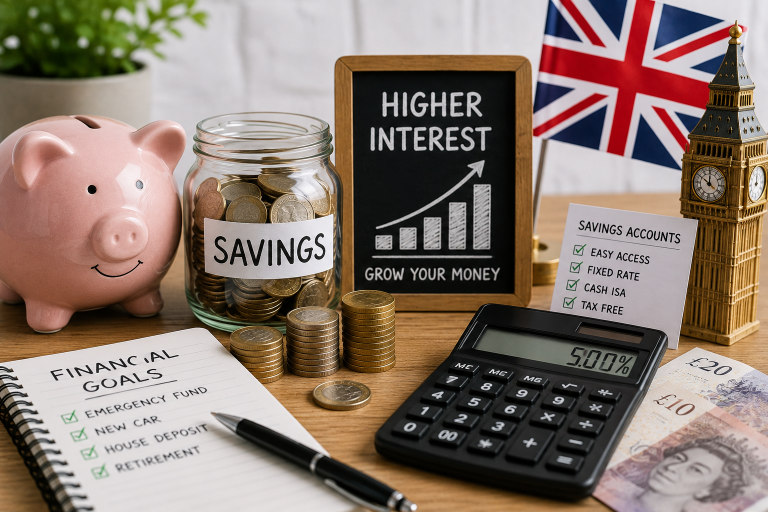
Almost half of Canadian households see their savings shrink due to inflation. This is why it’s urgent to start learning about investing today.
This guide is for Canadians new to investing. It’s for those with little savings or anyone seeking clear steps on starting their investment journey. You don’t need a big amount of money or a finance degree to get started. Using simple, cost-effective methods can help you outpace inflation, grow your wealth over time, and reach goals like buying a house, funding education, or planning retirement.
We’ll simplify common hurdles: confusing terms, worries about costs, the fear of losing money, and decoding accounts like TFSA or RRSP. This guide will cover investment types, setting goals, choosing accounts, picking tools, and avoiding common mistakes. This way, you can confidently go from doubting to doing.
Here’s a quick start checklist: Set a small monthly saving target, open a TFSA or RRSP if you can, choose a low-cost ETF or index fund as your first investment, and make it a habit to keep learning. We’ll focus on proven, low-cost options and things specifically important for Canadians, such as tax-friendly accounts and local investment firms.
What is Investing and Why It Matters
Investing helps turn unused money into a resource for future dreams. Unlike saving, its goal is to outgrow inflation. This is done by buying things like stocks, bonds, mutual funds, and ETFs. For those new to investing, understanding the basics is key. It includes learning about capital gains, dividends, and interest.
Understanding the Basics of Investing
Starting in investing involves a few important concepts. One is compound interest, where your earnings start to make their own earnings. When choosing where to invest, think about risks, how quick you can get your money out, and costs.
Stocks give you part ownership and the chance for profits plus dividends. Bonds are less risky and pay you interest. Both mutual funds and ETFs let many investors pool their money. This way, they can buy a variety of assets, making it less risky for those with less money to spend.
Remember, fees can reduce your profits over time. Spreading your investments can lessen the risk of a single loss. How fast you can turn your investment into cash, known as liquidity, is also crucial.
The Importance of Starting Early
Starting early gives you a big advantage. Investing a small amount in your 20s can grow more than if you wait to invest more later. This is due to compound growth, a fundamental idea for beginners.
With more time, you can risk more in stocks, potentially earning more. In Canada, using accounts like TFSAs and RRSPs wisely means your investments grow tax-free. Buying over time, or dollar-cost averaging, helps avoid the risk of bad timing.
Common Myths About Investing
Some myths can scare beginners away from investing. You don’t need a lot of money to start. Thanks to modern brokerages and the option to buy parts of shares, starting small is possible. And with the right strategy, investing is not just gambling.
It’s hard to outperform the market by timing your buys. Believing in quick riches or choosing expensive options can hurt your earnings. For reliable advice, check out the Investment Industry Regulatory Organization of Canada and the Financial Consumer Agency of Canada. They provide protection and help for investors.
| Topic | What to Know | Action for New Investors |
|---|---|---|
| Compound Interest | Earnings grow on prior earnings, boosting long-term results | Start early and contribute regularly |
| Diversification | Spreads risk across assets like stocks, bonds and ETFs | Mix asset types and use low-cost funds |
| Fees | High fees reduce net returns over time | Compare costs at brokerages and prefer low-fee ETFs |
| Risk vs Reward | Higher expected returns usually come with higher volatility | Match asset allocation to time horizon and comfort |
| Access & Accounts | TFSA and RRSP offer Canadian tax benefits for long-term saving | Use tax-advantaged accounts first when appropriate |
| Common Misconceptions | Timing market beats time in market and you need lots of money | Focus on long-term plans and start with small, regular investments |
Types of Investments to Consider
Entering the investment world might seem overwhelming at first. Choose options that align with your time frame, comfort with risk, and goals. Equities, fixed income, and funds often provide a solid start for Canadian beginners in investing.
Stocks: What You Need to Know
Stocks give you a piece of a company. When the company does well, shareholders can make money through capital gains or dividends. But, stocks can be risky with their value going up and down often.
Buying individual stocks focuses on specific companies. Funds, on the other hand, spread out investment across many companies without selecting each one. The type of business and market size are important. The TSX has lots of financials, energy, and materials companies. Adding stocks from the U.S. and other countries can make a portfolio more varied, which is good for Canadian investors.
Some stocks pay dividends, adding to your income. In Canada, certain dividends get taxed less. But, dividends from other countries might be taxed more. These tax details are vital when making beginner investment plans.
Bonds: A Safer Alternative
Bonds are like giving a loan to a government or business. You get interest and your loaned amount back later. They’re usually less risky than stocks but also bring in less money over time.
You can find different bonds like those from the Government of Canada, provinces, or companies. Bond funds and ETFs group many bonds in one, making them easier to invest in. GICs are very safe and give predictable returns in Canada.
Rising or falling interest rates can change bond prices. The risk also depends on who issued the bond. Bonds can make your investment mix steadier and are good for short goals or beginners.
Mutual Funds and ETFs Explained
Mutual funds are often managed by a professional. ETFs usually follow a set index and can be less expensive. ETFs are traded like stocks and often have less tax and are clearer about what they hold.
Index ETFs mimic certain benchmarks, like the TSX Composite or the S&P 500. There are bond ETFs and international ETFs too. When picking funds, look at costs, how well they track their index, and the issuer’s reputation. Top issuers like Vanguard, BlackRock (iShares), BMO, and RBC offer a wide range of options.
For beginners, broad-market ETFs and balanced ETFs are simple choices. They help with starting investment plans and fit into easy beginner strategies well.
Setting Your Investment Goals
Setting clear goals is crucial for successful investing. Start by noting down your desires and their deadlines. This guide for new investors links your goals with suitable assets, timelines, and accounts. Doing so ensures your money is working towards actual objectives.
Short-Term vs. Long-Term Goals
Short-term goals have a deadline of less than five years. These include saving for emergencies, a house down payment, or a holiday. To keep your money safe, use cash, high-interest savings, GICs, or short-term bonds. A typical choice is 80–100% in cash/GICs and 0–20% in short-term bonds.
Long-term goals are for five years or more, such as retirement or saving for a big purchase. Stocks are key for growth here. A simple plan might put 60–80% in stocks and 20–40% in bonds, focusing on growth over many years.
Risk Tolerance Assessment
Your risk tolerance is influenced by your age, income reliability, debt, investment experience, and market reaction. Generally, younger folks can take more risks with stocks. Those relying on a stable income may lean towards safer options.
To gauge your risk level, use tools like questionnaires from banks or robo-advisors. Consider how you’d handle a 20% portfolio drop in one year. Your response helps shape your investment choices.
Align your risk tolerance with your asset mix. If you’re comfortable with higher risk, go for more stocks. Prefer less risk? Look towards bonds and cash. Remember to re-evaluate your strategy after major life changes.
Creating a Realistic Timeline
For each goal, determine a timeline and use conservative growth estimates for planning. This approach reduces the likelihood of unwelcome surprises. Plan your annual contributions and expected gains.
Have safeguards like an emergency fund that covers 3 to 6 months of expenses. This safety net helps avoid desperate moves during bad times.
Choose the right account for your goal. A TFSA is great for saving for a home, offering tax-free growth. An RRSP is best for retirement savings and can be used for the Home Buyers’ Plan. Selecting suitable accounts boosts after-tax benefits and supports starter investment plans.
Follow these tips for new investors to create effective strategies. Keep your goals clear, revisit them each year, and tweak your plan as your life evolves. This approach keeps investing simple and successful for beginners.
Building Your Investment Portfolio
Starting a portfolio can feel overwhelming. This guide gives easy steps for investing as a beginner. It also shows effective strategies for starting investments in Canada.
Diversification means spreading risk across different types of investments. This includes a mix of stocks, bonds, and cash in various sectors and countries. Using ETFs and mutual funds, you can cover a lot with a little money. A good start is 70% in global stock ETFs and 30% in Canadian bond ETFs for both growth and security.
ETFs from companies like Vanguard, iShares, and BMO help beginners reach global markets and dividend stocks easily. Mutual funds from banks, such as RBC and TD, are also good for small accounts, especially with low fees.
Asset allocation involves balancing your investments based on your age or risk preference. It can range from conservative to growth-focused. Target-date funds are great for those who prefer a hands-off approach, adjusting risk as time goes on.
Most people find that passive investing beats active management after fees are taken into account. Investing in low-cost index ETFs is efficient, tracking wide market indexes. Rebalance yearly or when your investment mix shifts too much. Remember to consider tax impacts in non-retirement accounts.
Reviewing your portfolio regularly helps you stay on track. Check how you’re doing every three months and do a big review yearly. Look at fees, compare your performance to benchmarks, and consider any life changes. Use a spreadsheet or an app to monitor your investments, trades, and earnings for taxes.
Avoid making frequent trades based on the latest market trends. Stick to your basic investing plan and follow beginner strategies: set clear goals, rebalance periodically, and make careful changes. These methods guide you to the best investments for beginners while keeping risk in check.
Choosing the Right Investment Account
Choosing the right account is key for beginner investors. Different accounts affect taxes, how flexible they are, and how to save for goals. This guide will help you look at common options in Canada and find the best one for your investment start.
Tax-Free Savings Account (TFSA) Benefits
The TFSA allows your money to grow and be withdrawn tax-free. Any unused contribution space rolls over to the next year. Plus, you can put back the amount you withdraw the following year.
TFSAs are great for emergency funds, saving for a house, or adding to retirement savings. They grow your money without tax and you can access it anytime. Check the Canada Revenue Agency website for the 2025 contribution limits before you decide how much to contribute.
Registered Retirement Savings Plan (RRSP)
RRSPs lower your taxable income now and taxes on growth are delayed. But, when you take money out, it’s taxed as income. You can also borrow from it to buy a home or for education without penalties, following certain rules.
RRSPs are good for those who think they’ll be in a lower tax bracket when they retire. Strategies like Spousal RRSPs can save on taxes. It’s important to look into your employer’s plan and how much room you have to contribute.
Self-Directed vs. Managed Accounts
With self-directed accounts, you choose your investments through platforms like Questrade or RBC Direct Investing. They are good for investors who want to save on fees and manage their own portfolio.
Managed accounts, provided by firms like Wealthsimple, handle everything for a fee. They’re best for those who prefer not to manage their investments. Consider what’s important to you: cost, control, or convenience.
Think about fees, how much control you want, and how easy it is to use the account. Moving accounts between firms might cost money and require paperwork. Making smart choices helps beginners succeed in investing for the long term.
Understanding Market Trends and Analysis
Learning about market movements boosts confidence for beginners in the stock market. This guide offers easy ways to assess company values, recognize price trends, and keep up with reliable news. It’s ideal for those starting to invest.
Fundamental Analysis Overview
Fundamental analysis evaluates a company’s financial well-being. It involves checking cash flow, revenue growth, profit margins, and valuation ratios like P/E, P/B, and dividend yield. These allow long-term investors to select stocks or assess fund performances.
In Canada, look at SEDAR+ for company filings and read bank analysts’ reports, including RBC and BMO. Choose familiar businesses and use straightforward valuation methods. Stay away from complicated models that might confuse beginners.
Technical Analysis Basics
Technical analysis focuses on price patterns and indicators such as moving averages, RSI, and trendlines. It’s used by traders to decide when to buy or sell. However, these techniques are less important for beginners, as they can lead to risky timing attempts.
Basics can help in making trades and setting stop-loss orders. Practice on demo accounts from services like Questrade or Wealthsimple Trade before investing actual money. Take time to learn and experiment without rush.
Staying Informed with News Sources
Reliable news sources are key for informed investing decisions. Preferred Canadian sources include The Globe and Mail, Financial Post, CBC Business, and BNN Bloomberg. Bloomberg and Reuters are great for global market insights. Always check IIROC and the Canadian Securities Administrators for updates.
Follow updates from Vanguard Canada, BMO Global Asset Management, and RBC Global Asset Management. Use Google Finance or Yahoo Finance to monitor investments. Always question headlines and verify information to make informed choices.
Tools and Platforms for Beginner Investors
Finding the right tools can make investing easier for newcomers. Trusty platforms offer help with setting up accounts, making trades, and continuous learning. They come with easy-to-use interfaces and safety features.
Here are some Canadian online brokerages that fit various needs. Consider their fees, account types, research tools, mobile apps, and any minimum requirements.
It’s important to compare key players. Find what works best for you, supports your goals, and offers straightforward pricing.
| Platform | Strengths | Account Types | Fees / Notes |
|---|---|---|---|
| Questrade | Low-cost trades, strong ETF selection, advanced desktop platform | TFSA, RRSP, Margin, RESP | No account minimum; stock trades from low per-share fees; currency conversion fees may apply |
| Wealthsimple Trade | Commission-free trades for stocks and ETFs, simple mobile app | TFSA, RRSP, Personal | No commissions on Canadian trades; USD conversions may incur fees; limited advanced research |
| RBC Direct Investing | Robust research, branch support, integrated banking | TFSA, RRSP, RESP, Margin | Higher per-trade commissions for self-directed trades; mutual fund fees vary |
| TD Direct Investing | Powerful trading platforms, investor education, wide product range | TFSA, RRSP, RESP, Margin | Higher fees for DIY trades; strong research tools justify cost for some users |
| BMO InvestorLine | Good customer support, solid research, integrated bank services | TFSA, RRSP, RESP, Margin | Standard commission structure; promotions sometimes reduce costs for new accounts |
Keep an eye on fees as they can impact your returns. This includes commissions, currency conversion fees for U.S. trades, mutual funds’ management fees, and costs for broker-assisted transactions.
Investment apps make managing your investments simpler. Robo-advisors and user-friendly apps help with tasks like rebalancing and setting goals. Popular in Canada are Wealthsimple Invest and Nest Wealth.
When looking at apps, prefer ones offering automatic contributions, round-ups, two-factor authentication, and clear support. Being covered by the Canadian Investor Protection Fund means added safety for eligible accounts.
Learning resources can speed up your understanding of investing. Explore using tools like compound interest calculators, RRSP vs TFSA comparison tools, and robo-advisor risk questionnaires to grow your knowledge.
Seek advice from reputable sources such as the Financial Consumer Agency of Canada and the Canadian Securities Administrators. Books like The Little Book of Common Sense Investing by John C. Bogle and A Random Walk Down Wall Street by Burton Malkiel are great for basics.
Don’t forget local resources. Your community might offer workshops, bank seminars, and library materials. These can provide practical investment tips and hands-on assistance for beginners.
Common Mistakes to Avoid
New investors often face common pitfalls. Spotting them early can save both money and stress. This guide provides practical advice for beginners investing in stocks.
Emotional decision-making often leads to poor investment returns. Fear causes investors to sell at low points. Greed makes them buy at highs. Both behaviors disrupt well-thought-out plans and hurt future goals.
Create a firm plan and stick to it to avoid emotional trading. Use automatic investing and stay true to your asset mix. Understand biases like thinking recent events will continue, following the crowd, or only believing information that agrees with your opinion. Fight these with diverse investments and strategies based on solid evidence.
Chasing hot trends is likely to fail. Attempting to predict market highs and lows is a gamble. History shows steady investing strategies usually outperform trying to time the market. Trading a lot can lead to extra fees, tax bills, and lower performance compared to holding investments.
Keep your eyes on your long-term goals. Use regular investments to get into the market. Avoid getting distracted by hot stock tips or industry trends. Have a checklist to ensure every trade aligns with your long-term objectives. This is key for beginners to make consistent progress in investing.
Neglecting education can be expensive. Not knowing the fees, tax implications, and how different investments work can lead to poor decisions and even scams. It’s better to start investing small and learn as you go.
Learn more through brokers’ educational resources, IIROC, local securities regulators, finance books, and certified financial planners. Keep learning over time. This way, beginners can grow to use the stock market effectively, guided by a reliable starter’s guide.
Next Steps for Beginner Investors
For beginners, investing starts with turning ideas into a simple, repeatable plan. First, set clear goals and timelines. Assess your risk tolerance and pick the right account type—TFSA, RRSP, or a non-registered account—based on your taxes.
Build a basic, diverse portfolio with low-cost ETFs from Vanguard, iShares, or BMO. A conservative mix could be 20% stocks / 80% bonds. A balanced approach is 60% stocks / 40% bonds, and a growth focus means 90% stocks / 10% bonds. Include broad Canadian, U.S., and global equity ETFs plus a Canadian bond ETF.
Set up automatic contributions, have an emergency fund, and pay off high-interest debt before investing a lot.
If things get complicated, seek professional advice. Choose fee-only financial planners for big-picture planning. Or opt for fee-based advisors for regular help. Be careful with commission-based salespeople. Always check their registration with provincial regulators.
You could also look into one-time planning sessions, robo-advisors for low-cost management, or banking services for convenience. Make sure you know any advisor’s fees and duties before starting.
Make continuous learning and adapting part of your investing strategy. Review your portfolio regularly—annually or when big life changes happen. Track your progress against benchmarks like the S&P/TSX Composite or S&P 500.
Focus on the long term, keep costs down, and embrace beginner strategies like dollar-cost averaging and wide diversification. Start small, be consistent, and use Canadian tools and accounts to grow your confidence and money over time.